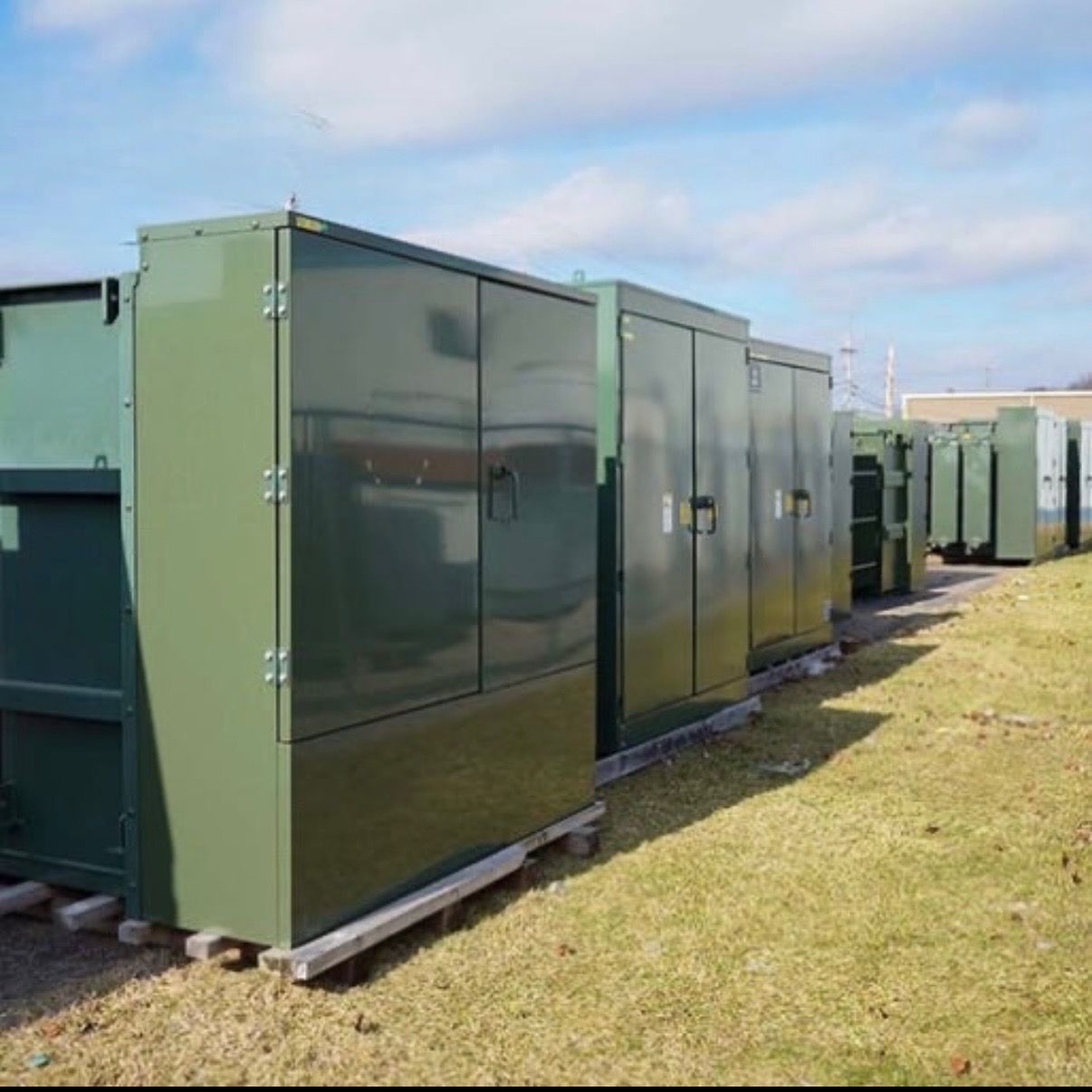
Your Savage equipment
A pole-mounted distribution transformer offered from Savage can be described first by its configuration: note whether the nameplate identifies single-phase or three-phase equipment, and provide manufacturer, kVA, primary and secondary voltages, and serial number when readable. Include visible mounting hardware and say whether brackets or other components are included, rather than assuming they will remain with the unit.
Condition and documentation
Report the tank and bushing condition only from safe observations: mention visible impact damage, corrosion, leaks, or damaged bushings, and distinguish confirmed facts from unknowns. Available service or fluid records may be shared, but do not guess fluid type or status. External photographs should be taken only from a safely accessible position, without approaching exposed live parts.
Prepare for a safe transfer
For coordination in Savage, give the actual pole or storage location, estimated weight and dimensions if available, and known access limitations for equipment and loading. If the unit remains mounted, state that and describe any known constraints without planning electrical work yourself. Qualified personnel must isolate and verify de-energization; trained workers handle lowering and keep clear of overhead lines.
Local access in Savage
Savage warehouse and industrial sites may have transformers associated with heavy equipment or building power. A buyer's evaluation benefits from knowing the unit's weight and any attached components.
Check available truck maneuvering room where stored materials or parked trailers narrow the yard.
About pole-mounted distribution transformers
Pole-mounted distribution transformers are typically compact units used to change distribution voltage for local loads. A buyer may distinguish single-phase from three-phase equipment and review voltage, kVA, mounting hardware, tank condition, and fluid history. Confirming ownership and whether bushings or brackets are damaged helps establish what is being offered.
Provide a readable nameplate, photographs of the tank and bushings, and any available records identifying the insulating fluid or PCB status.
Have qualified personnel isolate and verify de-energization before trained riggers lower the unit with suitable equipment while keeping clear of overhead lines.