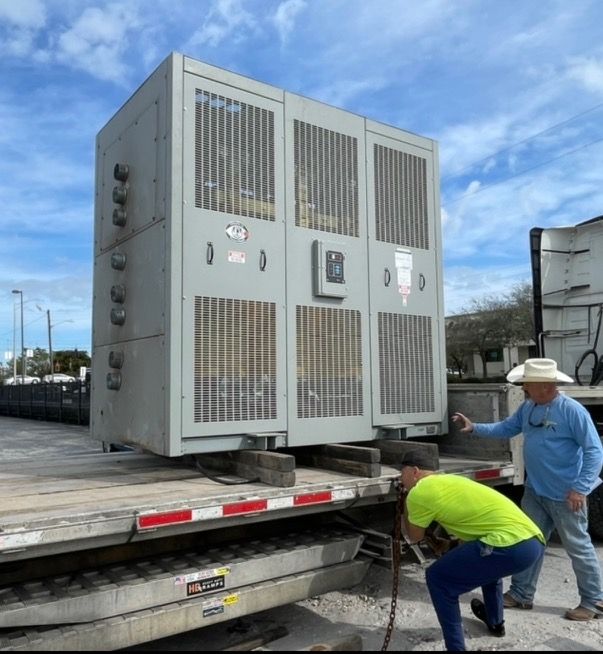
Your Savage equipment
For a dry-type transformer in Savage, useful nameplate fields include manufacturer, kVA, primary and secondary voltages, phase, serial number, and temperature-rise rating when visible. Also describe the enclosure configuration and whether ventilation panels or other accessories appear present. If a label is missing or unreadable, report that instead of estimating the rating.
Condition and documentation
Describe visible condition from outside: discoloration that may suggest overheating, moisture exposure, corrosion, impact, missing covers, or modifications. Do not open an enclosure to gather details or treat appearance as proof of operating history. Safely accessible exterior and nameplate photos can help; any inspection, isolation, and absence-of-voltage verification belongs to qualified electrical personnel.
Prepare for a safe transfer
Provide the Savage storage location, approximate weight and dimensions if known, and the route or loading constraints you already know about, such as limited room for handling equipment. Electrical-room placement may affect access, but do not assume a particular site layout. Mention whether the unit is installed or already removed, and leave disconnection and movement planning to qualified personnel.
Local access in Savage
Savage warehouse and industrial sites may have transformers associated with heavy equipment or building power. A buyer's evaluation benefits from knowing the unit's weight and any attached components.
Check available truck maneuvering room where stored materials or parked trailers narrow the yard.
About dry-type transformers
Dry-type transformers use air or solid insulation rather than a liquid-filled tank and are often installed in electrical rooms. Buyers review kVA, voltage, phase, temperature rise, enclosure configuration, ventilation, and signs of overheating or moisture exposure. Missing covers and modifications can also change the assessment.
Photograph the nameplate, ventilation openings, enclosure, and any visible discoloration or mechanical damage without opening energized equipment.
After qualified personnel isolate and verify de-energization, move the unit with rated equipment using suitable lift points and protect exposed coils and ventilation panels.