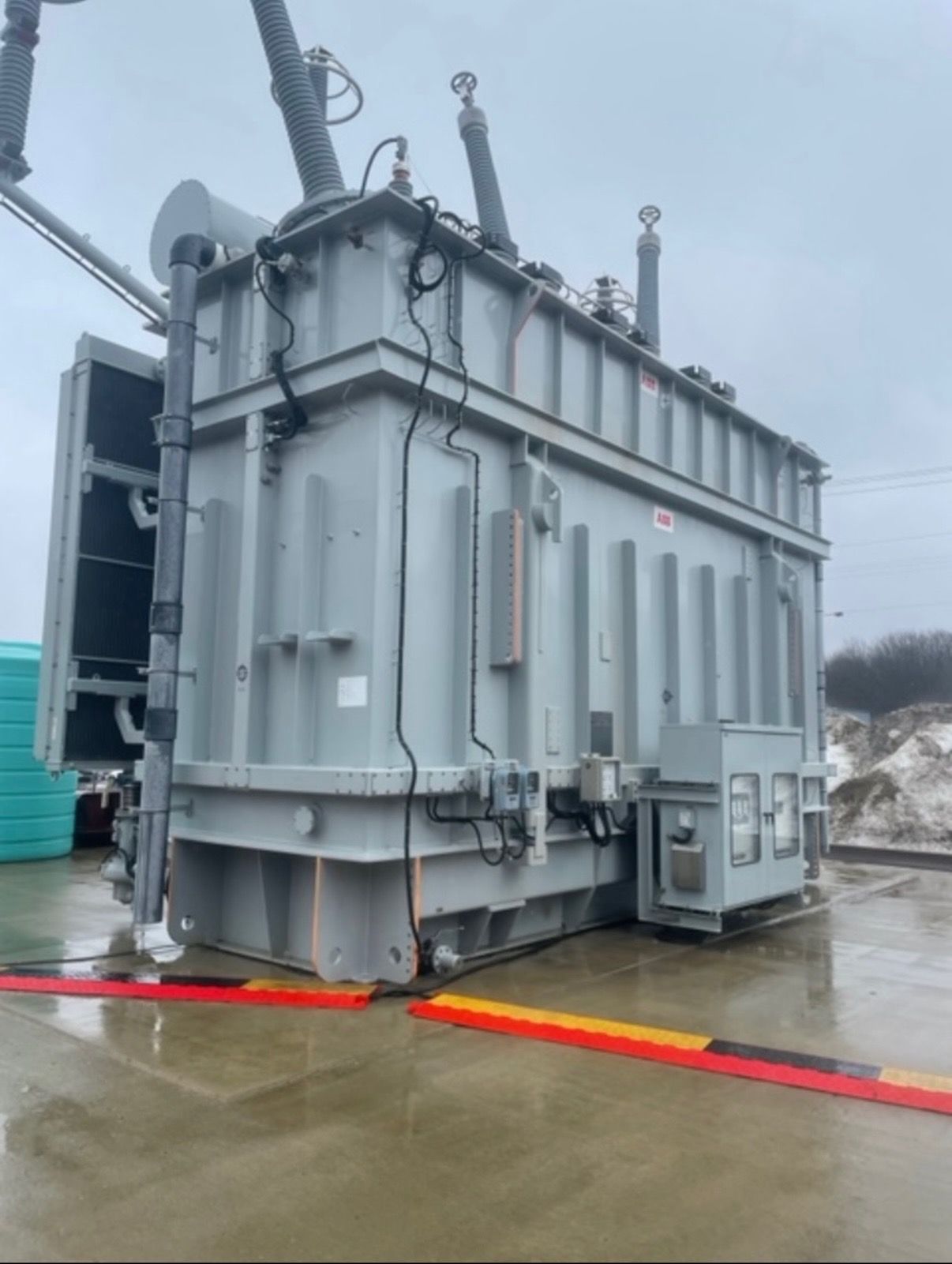
Your Owatonna equipment
For an Owatonna owner preparing to offer a substation or power transformer, start with any safely accessible nameplate information: manufacturer, kVA, primary and secondary voltages, phase, serial number, and cooling designation. Note whether tap equipment, radiators, bushings, or other accessories appear present. If a field is unreadable or unavailable, say so rather than estimating.
Condition and documentation
Describe the unit’s known condition and history, including visible tank damage, leaks, corrosion, damaged bushings, or known operating issues. Share existing fluid or PCB records if available, but do not infer fluid condition or classification from appearance. External nameplate and overall photographs should be taken only from a safely accessible position; do not open equipment or approach exposed electrical parts.
Prepare for a safe transfer
For review of a possible Owatonna pickup, provide the actual site location, approximate weight and dimensions if known, and details about access, lifting limits, loading equipment, and separately stored accessories. A large unit’s weight, center of gravity, lift points, and removal constraints matter; qualified electrical personnel must handle isolation and verification, with appropriate riggers planning movement.
Local access in Owatonna
Owatonna manufacturing and distribution facilities may have transformers serving motors and building systems. Owners can provide a list of related equipment if several units are being retired together.
Confirm the pickup sequence and available laydown space when multiple pieces are stored in the same plant area.
About substation and power transformers
Substation and power transformers handle voltage conversion for larger electrical systems and may have substantial tanks, radiators, bushings, or tap equipment. A buyer considers the winding voltages, rated capacity, cooling arrangement, service history, and whether major accessories are present. Fluid condition, known failures, and removal constraints can materially affect an evaluation.
Provide clear nameplate and bushing photographs, tap-changer details, overall weight, and available fluid and PCB records without assuming an unknown fluid is clean.
After qualified personnel isolate and verify the unit is de-energized, plan lifting and transport around its actual weight, center of gravity, approved lift points, and any separately secured accessories.