Your Owatonna equipment
When an Owatonna business has a pad-mounted transformer it may be considering selling, useful first details are the readable manufacturer, kVA, primary and secondary voltages, phase, serial number, and any visible fluid or cooling information on the nameplate. State whether ownership is confirmed or still being checked, since a unit’s location alone does not establish who may offer it.
Condition and documentation
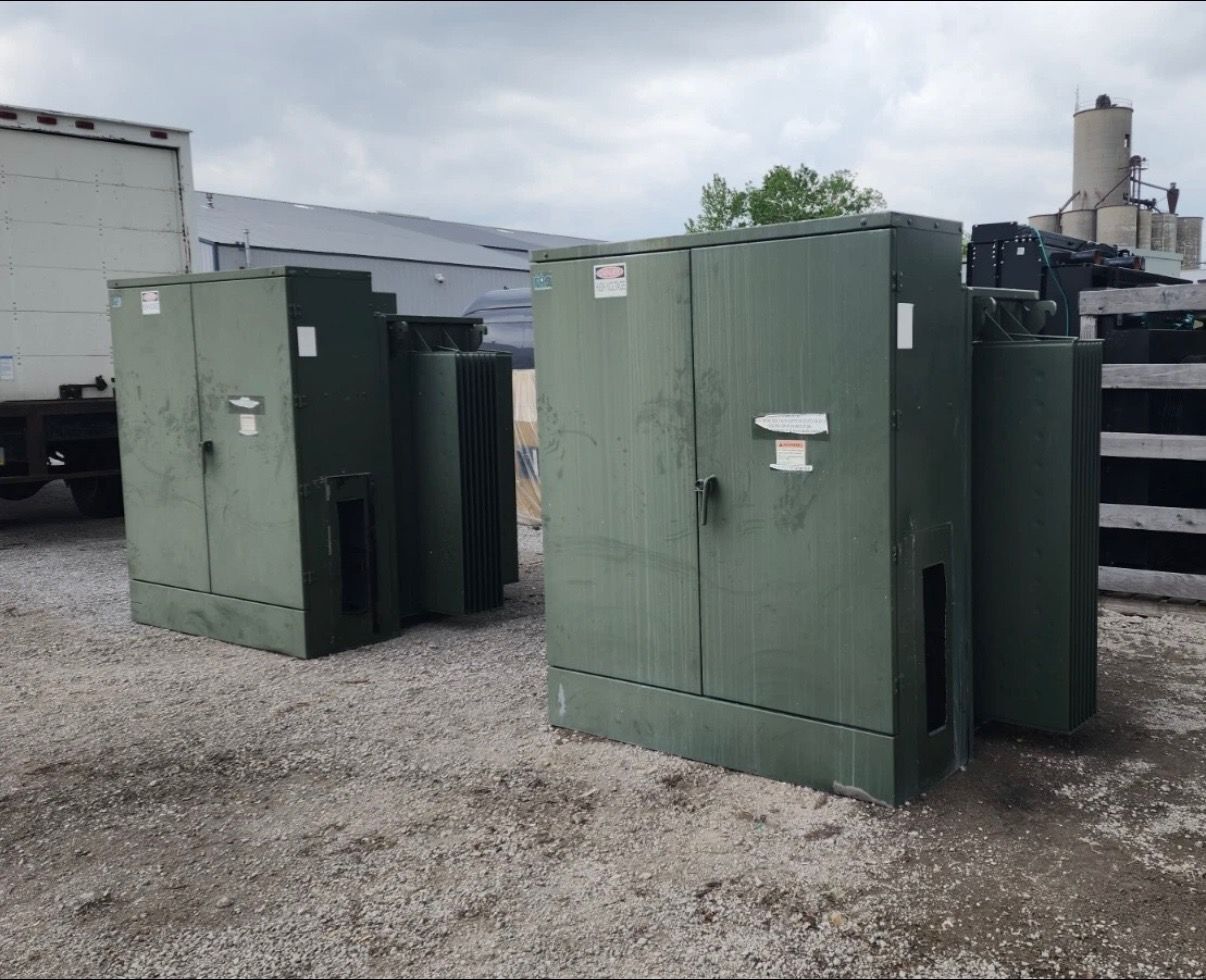
A concise condition report can mention cabinet and base corrosion, dents, damaged doors or cable-compartment areas, and any known leaks or service problems. Include existing fluid or PCB documentation when available, and mark unknowns plainly. Share exterior photographs and a nameplate image only if obtainable from a safe position; do not open the cabinet or touch or operate equipment.
Prepare for a safe transfer
Owatonna pickup coordination depends on the actual site and route from the unit to a loading area, not simply the city name. If known, give approximate weight and dimensions, pad and access details, overhead or doorway limits, and available loading equipment. Any isolation, voltage verification, disconnection, or inspection belongs to qualified electrical personnel following safe procedures.
Local access in Owatonna
Owatonna manufacturing and distribution facilities may have transformers serving motors and building systems. Owners can provide a list of related equipment if several units are being retired together.
Confirm the pickup sequence and available laydown space when multiple pieces are stored in the same plant area.
About pad-mounted transformers
Pad-mounted transformers sit in ground-level enclosures and commonly serve commercial or distribution loads. Buyers assess primary and secondary ratings, phase, enclosure condition, fluid information, and whether the unit is owned by the seller rather than a utility. Corrosion at the cabinet base or damage around cable compartments can affect value and removal planning.
Share the nameplate, cabinet and base photographs, ownership information, and any available fluid or PCB documentation.
Once qualified personnel isolate and verify de-energization, use suitable lifting provisions and protect the tank and cable compartments while moving the unit from its pad.