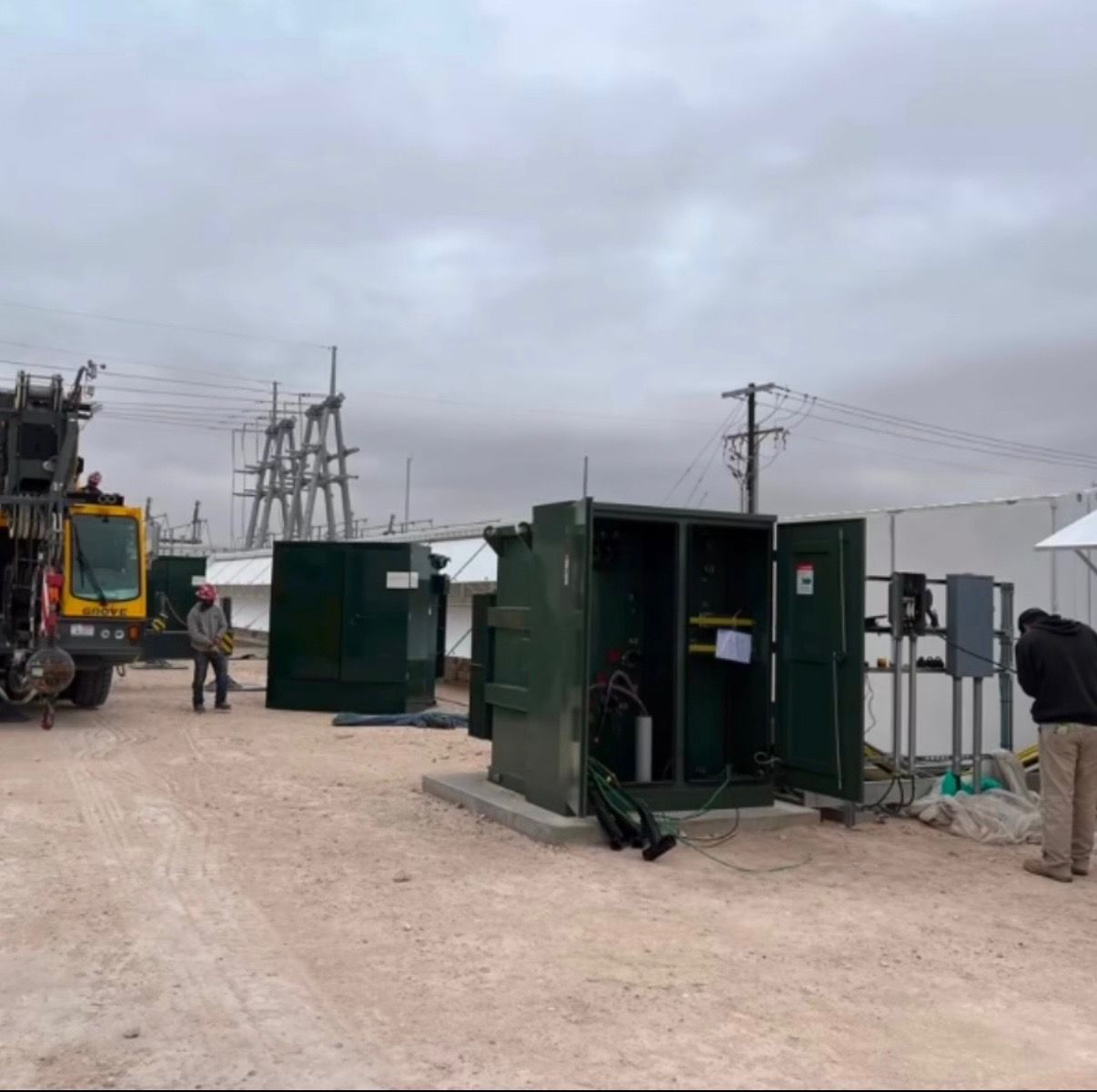
Your Farmington equipment
For a dry-type transformer being considered for purchase from a Farmington site, send available nameplate details such as manufacturer, serial number, kVA, primary and secondary voltages, phase, and temperature rise. Photos of the exterior enclosure, ventilation openings, and visible coil area can help describe the unit; do not remove covers or enter an unsafe area.
Condition and documentation
Mention known overheating discoloration, moisture exposure, enclosure damage, blocked or damaged ventilation, missing covers, or modifications. If operating history or a particular defect is unknown, state that plainly. A dry-type design does not establish condition or value. Any isolation, verification of absence of voltage, disconnection, inspection, or testing must be performed by appropriately qualified electrical personnel.
Prepare for a safe transfer
Share where the unit sits in Farmington—such as indoors, outdoors, or already staged—plus approximate dimensions and weight if available. Room access, doorways, stairs, turning space, and the route to a loading area may affect handling, as can outdoor ground conditions after rain or snowmelt. Note known lifting or loading constraints without attempting to move it.
Local access in Farmington
Farmington businesses and service properties may have equipment serving workshops, storage buildings, or larger commercial spaces. Owners can identify whether a unit is indoors, outdoors, or already staged for loading.
Determine whether a yard surface can support lifting equipment after rain or snowmelt.
About dry-type transformers
Dry-type transformers use air or solid insulation rather than a liquid-filled tank and are often installed in electrical rooms. Buyers review kVA, voltage, phase, temperature rise, enclosure configuration, ventilation, and signs of overheating or moisture exposure. Missing covers and modifications can also change the assessment.
Photograph the nameplate, ventilation openings, enclosure, and any visible discoloration or mechanical damage without opening energized equipment.
After qualified personnel isolate and verify de-energization, move the unit with rated equipment using suitable lift points and protect exposed coils and ventilation panels.