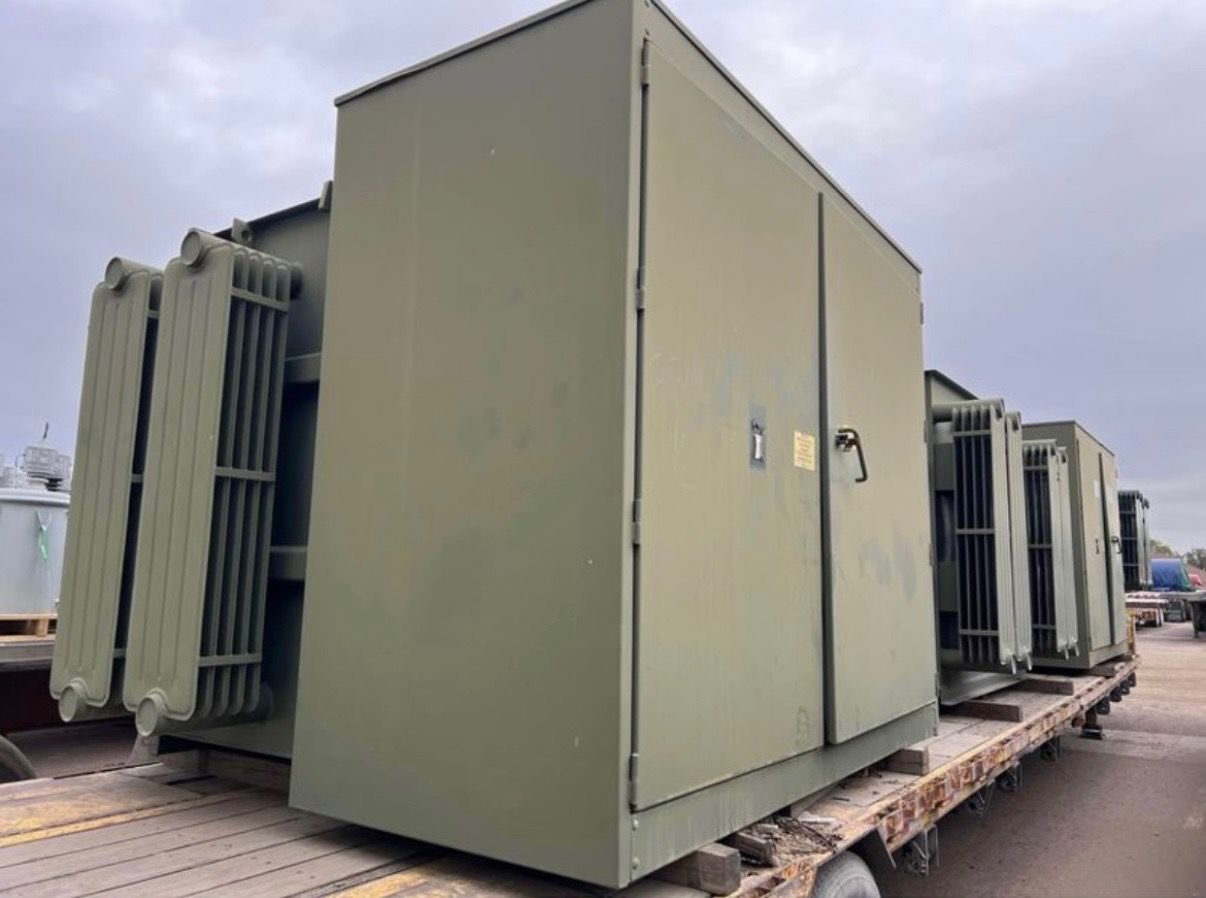
Your Farmington equipment
Owners in Farmington offering a cast-resin transformer can begin with the external nameplate: manufacturer, serial number, kVA, primary and secondary voltages, phase, and cooling information if legible. Safely accessible photos of the coils, supports, enclosure, and any fan equipment help identify what is present without opening energized equipment or touching components.
Condition and documentation
Describe visible resin cracks, impact marks, contamination, damaged supports, missing panels, or incomplete fan accessories, while separating observation from assumption. Include available service records, but do not infer fluid status or suitability from the cast-resin design. If inspection or testing is needed, it belongs to qualified electrical personnel after safe isolation and verification.
Prepare for a safe transfer
For a potential Farmington pickup, provide the transformer’s location, approximate dimensions and weight if documented, and whether it is indoors, outdoors, or staged. Note door and aisle clearances, loading access, lifting constraints, and outdoor surface conditions if known. Movement should use designated structural lifting points; slings or forks must not bear on resin coils, and qualified personnel handle de-energization.
Local access in Farmington
Farmington businesses and service properties may have equipment serving workshops, storage buildings, or larger commercial spaces. Owners can identify whether a unit is indoors, outdoors, or already staged for loading.
Determine whether a yard surface can support lifting equipment after rain or snowmelt.
About cast-resin transformers
Cast-resin transformers are a dry-type design with windings encapsulated in resin and are used in applications where a liquid-filled unit may not be preferred. A buyer looks at voltage, kVA, cooling provisions, enclosure or fan accessories, and the visible condition of the encapsulated windings. Cracks, impact damage, contamination, and incomplete accessories can affect further evaluation.
Supply nameplate and coil photographs, noting visible resin cracks, damaged supports, fan equipment, and available service records.
Following isolation and verification by qualified personnel, lift at designated structural points and prevent slings or forks from bearing on the resin coils.