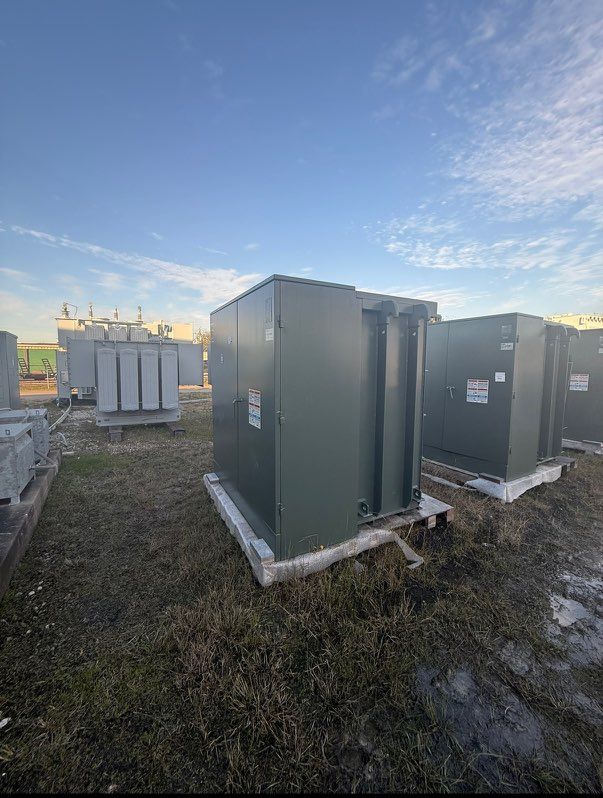
Your Maple Grove equipment
When offering a cast-resin transformer from a Maple Grove property, provide the nameplate information already available: manufacturer, kVA, primary and secondary voltages, phase, serial number, cooling method, and temperature rise if listed. A safely accessible external photo can show useful details; there is no need to expose or handle the windings to identify the unit.
Condition and documentation
Note visible resin cracks, impact marks, contamination, damaged supports, enclosure condition, and whether fan or other accessories appear present. State any known service history, but do not infer internal condition from appearance; unobserved details can remain unknown. Avoid touching or cleaning the coils for photographs, since their condition should be documented without disturbing the equipment.
Prepare for a safe transfer
For a Maple Grove site, provide the transformer’s location, approximate dimensions and weight if known, and any constraints on moving it through the building or toward a loading point. Identify narrow access, stairs, or limited vehicle approach when applicable. Qualified personnel must isolate and verify the unit before removal; handling plans should protect the resin windings.
Local access in Maple Grove
Maple Grove office parks and commercial properties may use equipment ranging from small dry-type transformers to larger outdoor units. A redevelopment project can make existing equipment available for a buyer to assess.
Confirm whether a crane or truck can reach the pad without crossing landscaped areas or underground utilities.
About cast-resin transformers
Cast-resin transformers are a dry-type design with windings encapsulated in resin and are used in applications where a liquid-filled unit may not be preferred. A buyer looks at voltage, kVA, cooling provisions, enclosure or fan accessories, and the visible condition of the encapsulated windings. Cracks, impact damage, contamination, and incomplete accessories can affect further evaluation.
Supply nameplate and coil photographs, noting visible resin cracks, damaged supports, fan equipment, and available service records.
Following isolation and verification by qualified personnel, lift at designated structural points and prevent slings or forks from bearing on the resin coils.