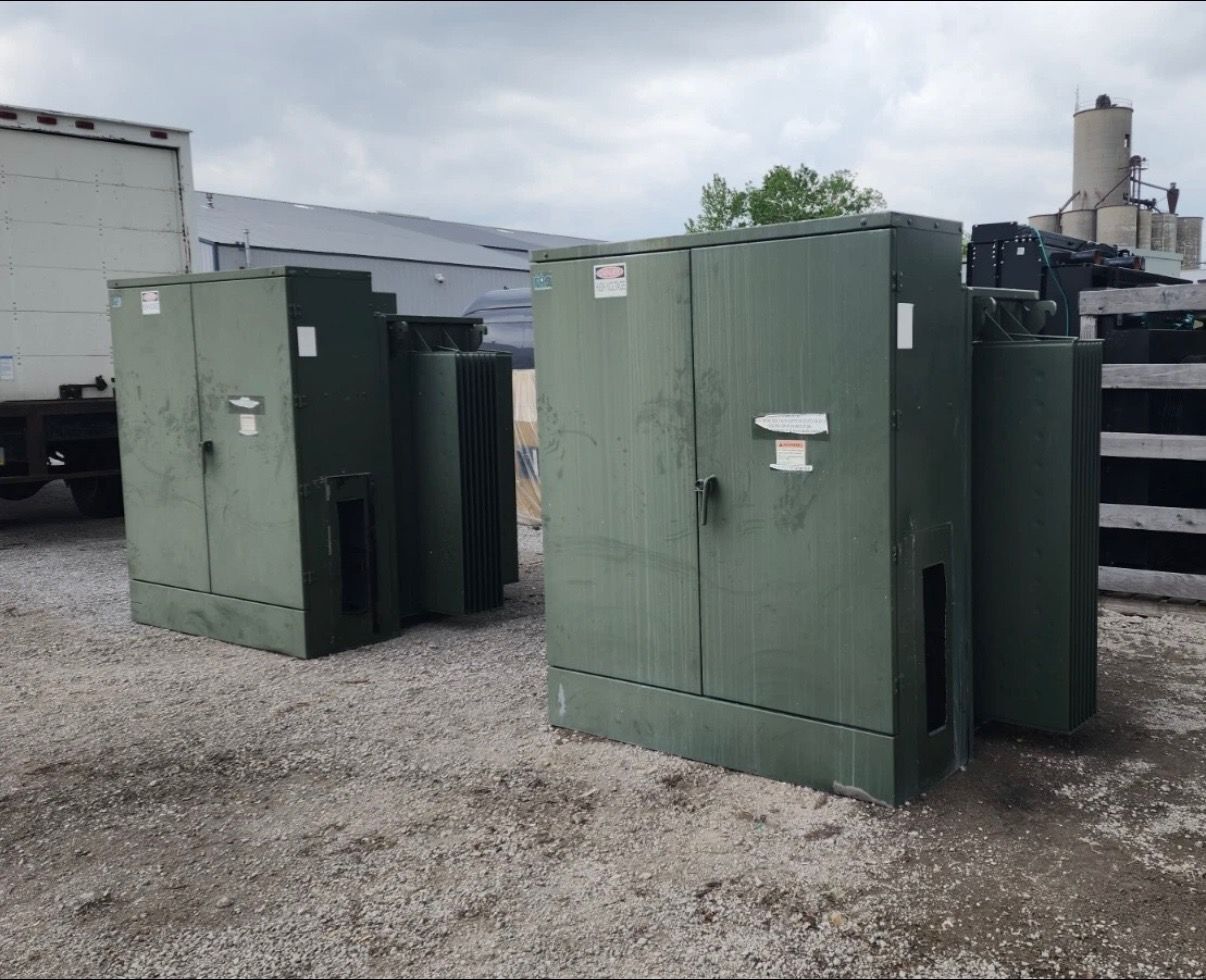
Your Burnsville equipment
A Burnsville owner considering a cast-resin transformer can share its nameplate details without disturbing the unit: manufacturer, serial number, kVA, winding voltages, phase, and cooling information where visible. Identify any fan equipment or accessories only if known. If the nameplate is unreadable or a rating is unavailable, say that directly instead of inferring it.
Condition and documentation
Describe the visible resin coils, supports, enclosure, and ventilation from a safely accessible position. Note any apparent cracks, impact damage, contamination, corrosion, or missing accessories, while distinguishing observation from confirmed condition. Existing service records may help provide context. Do not remove covers or touch coils to obtain photographs or assess damage.
Prepare for a safe transfer
For coordination at the Burnsville location, provide the unit’s present position, approximate weight and dimensions if known, and the route and loading constraints. Mention clearances, shared spaces, and any known limits on lifting equipment access. If removal is considered, qualified electrical personnel must isolate and verify de-energization; handling should avoid placing lifting forces on resin coils.
Local access in Burnsville
Burnsville businesses may operate from multi-tenant industrial buildings or retail properties with dedicated electrical rooms. A system replacement can leave a transformer or related switchgear available for purchase evaluation.
Check the permitted path through shared tenant space and protect the floor where rigging equipment will travel.
About cast-resin transformers
Cast-resin transformers are a dry-type design with windings encapsulated in resin and are used in applications where a liquid-filled unit may not be preferred. A buyer looks at voltage, kVA, cooling provisions, enclosure or fan accessories, and the visible condition of the encapsulated windings. Cracks, impact damage, contamination, and incomplete accessories can affect further evaluation.
Supply nameplate and coil photographs, noting visible resin cracks, damaged supports, fan equipment, and available service records.
Following isolation and verification by qualified personnel, lift at designated structural points and prevent slings or forks from bearing on the resin coils.