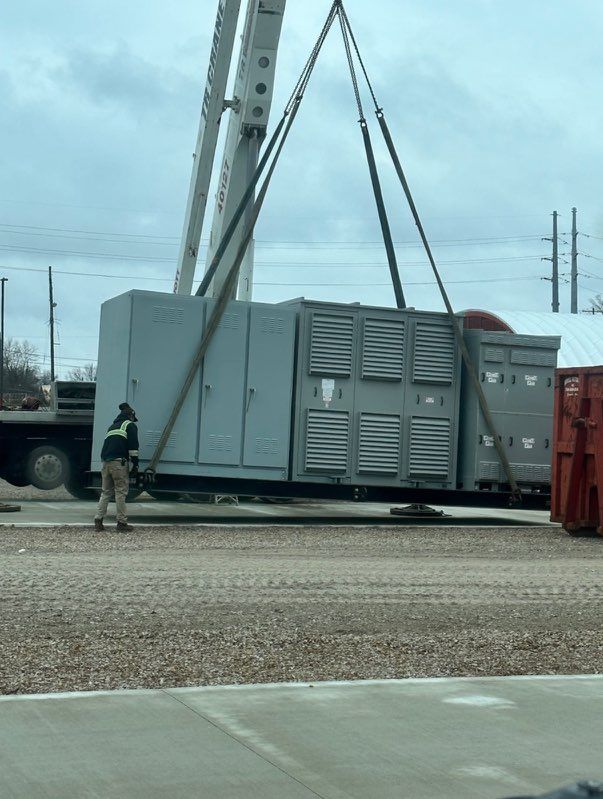
Your Woodbury equipment
A Woodbury owner considering a dry-type transformer sale can begin with the external nameplate: manufacturer, serial number, kVA, primary and secondary voltages, phase, and temperature-rise rating if visible. Note enclosure type and any listed cooling details when known. A safely accessible photo is helpful; leave covers in place and do not approach exposed live parts.
Condition and documentation
Describe visible enclosure damage, missing covers, blocked or damaged ventilation openings, discoloration, moisture signs, or modifications, and state whether operating history is available. These observations do not establish internal condition, and unknowns should remain explicit. Isolation, verification of absence of voltage, disconnection, inspection, and testing are tasks for appropriately qualified electrical personnel following safe procedures.
Prepare for a safe transfer
Include the Woodbury building or room location, approximate weight and dimensions if known, and constraints such as narrow doorways, stairs, low clearance, or loading access. If installed near a customer entrance or busy parking area, note any access or traffic considerations. Do not assume a unit can be moved through a route or that lifting equipment is available.
Local access in Woodbury
Retail centers and medical offices in Woodbury may have building transformers or outdoor service equipment. An owner can provide nameplate photographs and explain whether the unit is still connected.
Plan around customer entrances and parking-lot traffic when the equipment sits beside a busy storefront.
About dry-type transformers
Dry-type transformers use air or solid insulation rather than a liquid-filled tank and are often installed in electrical rooms. Buyers review kVA, voltage, phase, temperature rise, enclosure configuration, ventilation, and signs of overheating or moisture exposure. Missing covers and modifications can also change the assessment.
Photograph the nameplate, ventilation openings, enclosure, and any visible discoloration or mechanical damage without opening energized equipment.
After qualified personnel isolate and verify de-energization, move the unit with rated equipment using suitable lift points and protect exposed coils and ventilation panels.