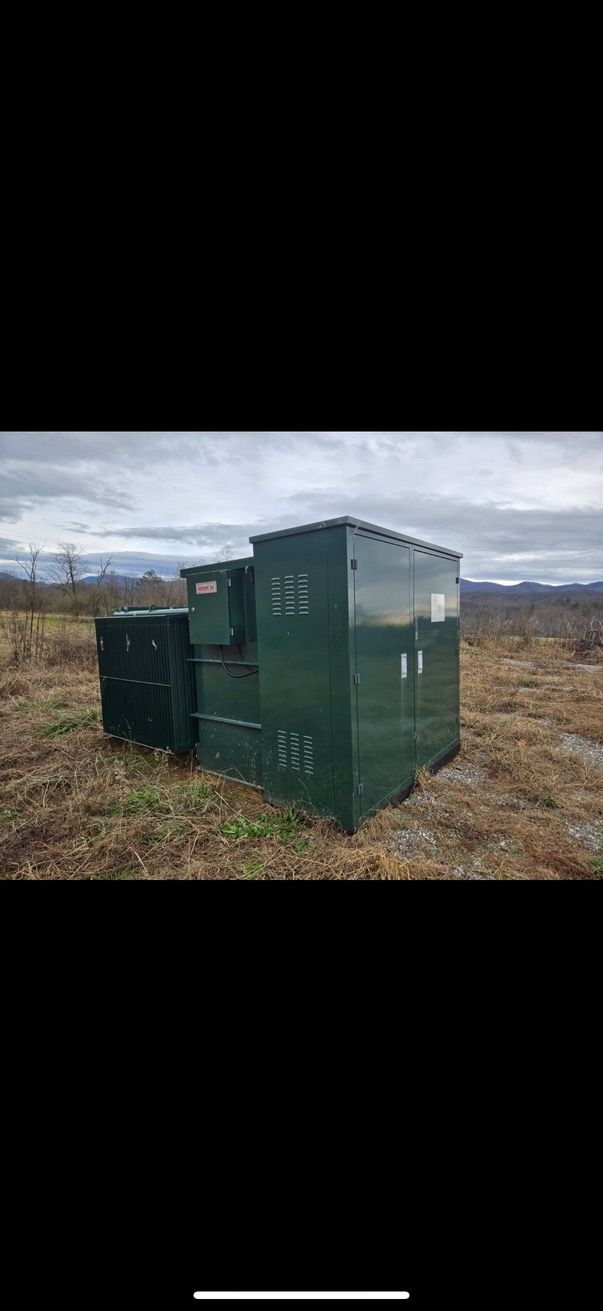
Your White Bear Lake equipment
When offering a cast-resin transformer from White Bear Lake, share its manufacturer, kVA, primary and secondary voltages, phase, serial number, and cooling or fan information if listed. Existing service records can add context. An external nameplate or coil photo is useful only when obtainable from a safely accessible position; there is no need to open an enclosure for this request.
Condition and documentation
Describe visible resin cracks, impact marks, contamination, damaged supports, or missing fan equipment, and say plainly when the condition or history is unknown. Do not treat the cast-resin design or a clean-looking surface as proof of operating condition. Isolation, voltage verification, disconnection, inspection, and testing should be performed only by appropriately qualified electrical personnel using safe procedures.
Prepare for a safe transfer
For the actual White Bear Lake pickup location, provide approximate weight and dimensions if known, where the transformer is situated, and the route and loading constraints, such as doorway clearance, stairs, turns, or limited staging space. Mention any known designated lifting points from existing documentation; do not improvise a lift. Site access affects coordination, but no particular removal arrangement can be assumed.
Local access in White Bear Lake
White Bear Lake commercial properties and workshops may use transformers of different sizes and ages. An owner can help a buyer assess a unit by describing its last known use and visible condition.
For older commercial buildings, check whether a rear service door opens fully with rigging equipment in place.
About cast-resin transformers
Cast-resin transformers are a dry-type design with windings encapsulated in resin and are used in applications where a liquid-filled unit may not be preferred. A buyer looks at voltage, kVA, cooling provisions, enclosure or fan accessories, and the visible condition of the encapsulated windings. Cracks, impact damage, contamination, and incomplete accessories can affect further evaluation.
Supply nameplate and coil photographs, noting visible resin cracks, damaged supports, fan equipment, and available service records.
Following isolation and verification by qualified personnel, lift at designated structural points and prevent slings or forks from bearing on the resin coils.