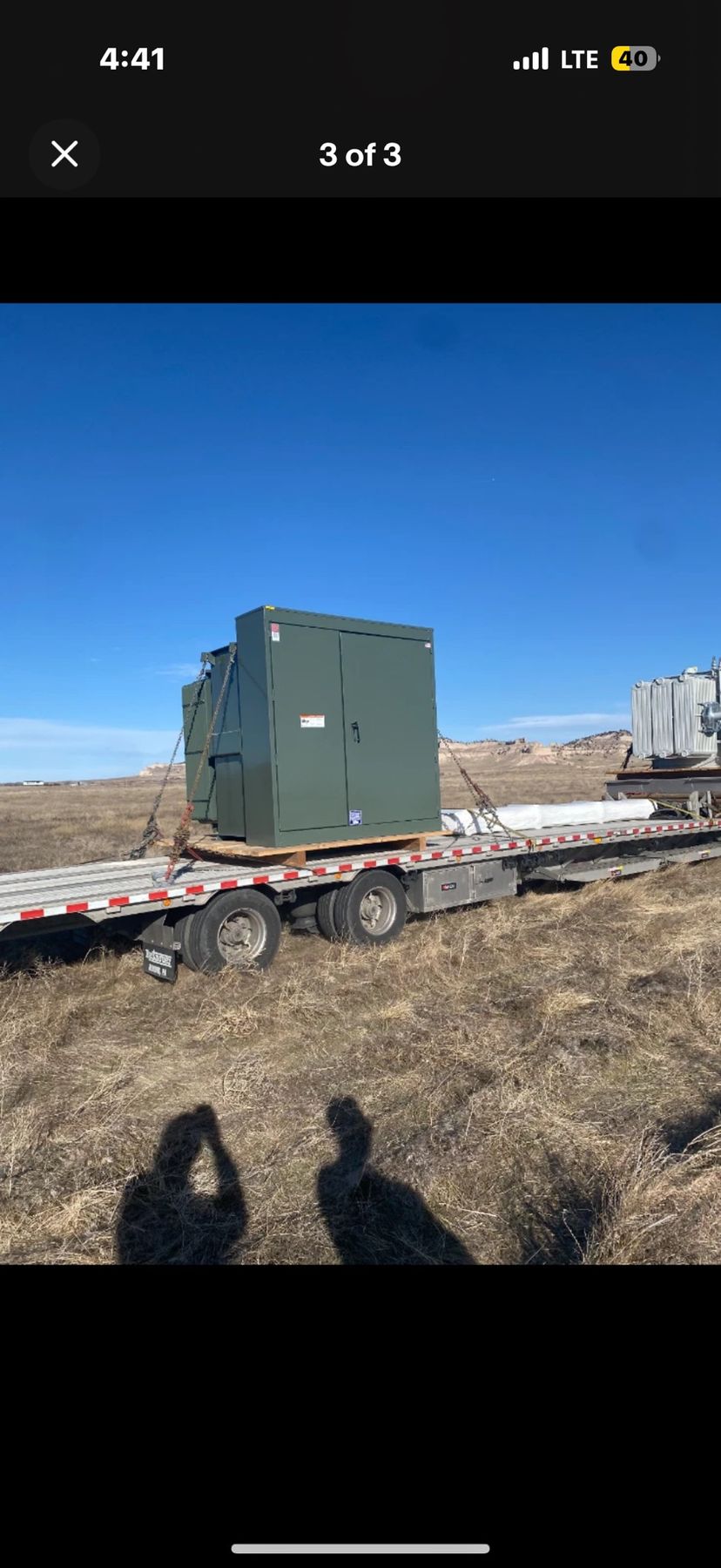
Your St. Paul equipment
For a cast-resin transformer offered from St. Paul, provide visible nameplate fields such as manufacturer, kVA, primary and secondary voltages, phase, serial number, and cooling or temperature-rise information if shown. External photographs may show the enclosure, ventilation, fans, and resin windings where safely visible. Do not open energized equipment or reach inside to obtain a clearer view.
Condition and documentation
Describe observable cracks, chips, impact marks, contamination, damaged supports, or missing fan equipment, and distinguish direct observation from known operating history. Share service records only if available; do not infer winding condition or suitability from appearance. If details are inaccessible or uncertain, say so. Any inspection, testing, or electrical work belongs to appropriately qualified personnel using safe procedures.
Prepare for a safe transfer
For St. Paul handling coordination, identify the transformer’s location and provide approximate weight and dimensions when documented. Note known stairs, door clearances, loading access, or lifting restrictions that apply at the actual site. Qualified personnel must isolate and verify de-energization before removal; handlers should use designated structural lift points and avoid loading slings or forks against resin coils.
Local access in St. Paul
St. Paul properties range from established industrial buildings to institutions with central electrical rooms. A renovation or service change can leave equipment that an owner no longer needs.
For an older building, map any stairs, floor transitions, and alley access before selecting handling equipment.
About cast-resin transformers
Cast-resin transformers are a dry-type design with windings encapsulated in resin and are used in applications where a liquid-filled unit may not be preferred. A buyer looks at voltage, kVA, cooling provisions, enclosure or fan accessories, and the visible condition of the encapsulated windings. Cracks, impact damage, contamination, and incomplete accessories can affect further evaluation.
Supply nameplate and coil photographs, noting visible resin cracks, damaged supports, fan equipment, and available service records.
Following isolation and verification by qualified personnel, lift at designated structural points and prevent slings or forks from bearing on the resin coils.