Your St. Cloud equipment
A cast-resin transformer in St. Cloud can be described with its manufacturer, serial number, kVA, primary and secondary voltages, phase, and cooling details when shown on the nameplate. An exterior nameplate photo is useful only from a safely accessible position. If fan equipment or enclosure accessories are visible, note their presence without opening the unit.
Condition and documentation
Report visible resin cracks, chips, contamination, damaged supports, corrosion, or signs of overheating, and distinguish observation from a diagnosis. State whether operating history or service records are available; do not infer internal condition from the resin surface. Isolation, voltage verification, inspection, and testing are tasks for appropriately qualified electrical personnel using safe procedures.
Prepare for a safe transfer
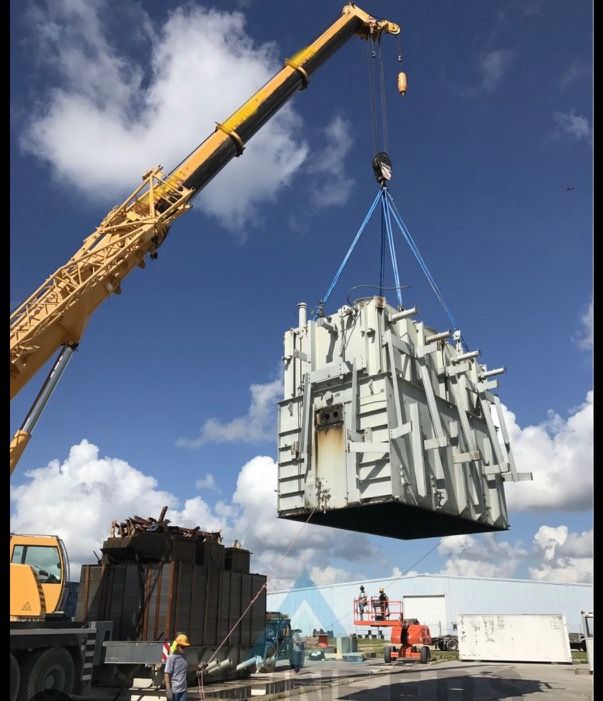
For a St. Cloud location, share the room or area where the transformer sits, plus documented weight and dimensions if available. Note door widths, turns, stairs, floor or loading limits, and lifting access that could affect coordination. Any movement should protect the resin coils; do not suggest handling methods or arrangements unless suitable points and conditions are confirmed.
Local access in St. Cloud
Manufacturing buildings and institutional properties in St. Cloud may have both indoor and outdoor distribution equipment. A plant or campus upgrade can leave a mix of transformer sizes to evaluate.
Identify which equipment belongs to the property owner and which remains utility-owned before planning a pickup.
About cast-resin transformers
Cast-resin transformers are a dry-type design with windings encapsulated in resin and are used in applications where a liquid-filled unit may not be preferred. A buyer looks at voltage, kVA, cooling provisions, enclosure or fan accessories, and the visible condition of the encapsulated windings. Cracks, impact damage, contamination, and incomplete accessories can affect further evaluation.
Supply nameplate and coil photographs, noting visible resin cracks, damaged supports, fan equipment, and available service records.
Following isolation and verification by qualified personnel, lift at designated structural points and prevent slings or forks from bearing on the resin coils.