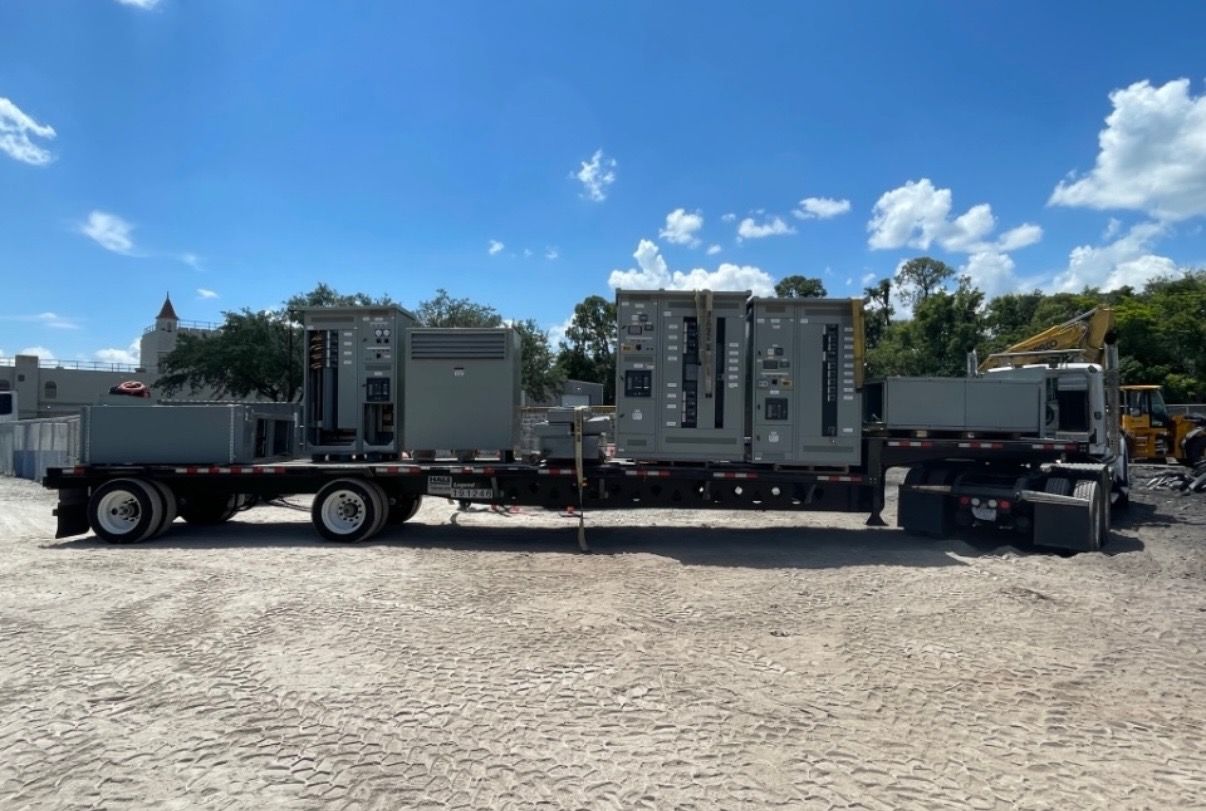
Your Sartell equipment
For a pole-mounted distribution transformer offered from Sartell, useful nameplate details include manufacturer, kVA, primary and secondary voltages, phase, serial number, and any visible connection or rating information. Note whether it appears to be single-phase or three-phase only if you can tell from available records or safely accessible markings. Do not climb or approach energized equipment for a better view.
Condition and documentation
Tell the buyer what is known about the tank, bushings, brackets, and mounting hardware, noting visible leaks, corrosion, impact damage, or missing components. If fluid or PCB records exist, report their availability; otherwise mark that information unknown. A photograph of the unit from a safe location can supplement the nameplate, but its appearance does not establish internal condition.
Prepare for a safe transfer
State where in Sartell the equipment is located, with approximate weight and dimensions if known, and describe any known access or loading constraints. Whether the unit is still elevated or already at ground level is useful context if known, not an assumption. Qualified personnel must isolate and verify de-energization; lowering and transport planning must account for actual conditions and overhead-line hazards.
Local access in Sartell
Sartell commercial and institutional properties may use transformers for building systems and larger electrical loads. A buyer can consider both a unit's electrical specifications and its removal setting.
Check whether removal requires passing through a shared mechanical room with limited working space.
About pole-mounted distribution transformers
Pole-mounted distribution transformers are typically compact units used to change distribution voltage for local loads. A buyer may distinguish single-phase from three-phase equipment and review voltage, kVA, mounting hardware, tank condition, and fluid history. Confirming ownership and whether bushings or brackets are damaged helps establish what is being offered.
Provide a readable nameplate, photographs of the tank and bushings, and any available records identifying the insulating fluid or PCB status.
Have qualified personnel isolate and verify de-energization before trained riggers lower the unit with suitable equipment while keeping clear of overhead lines.