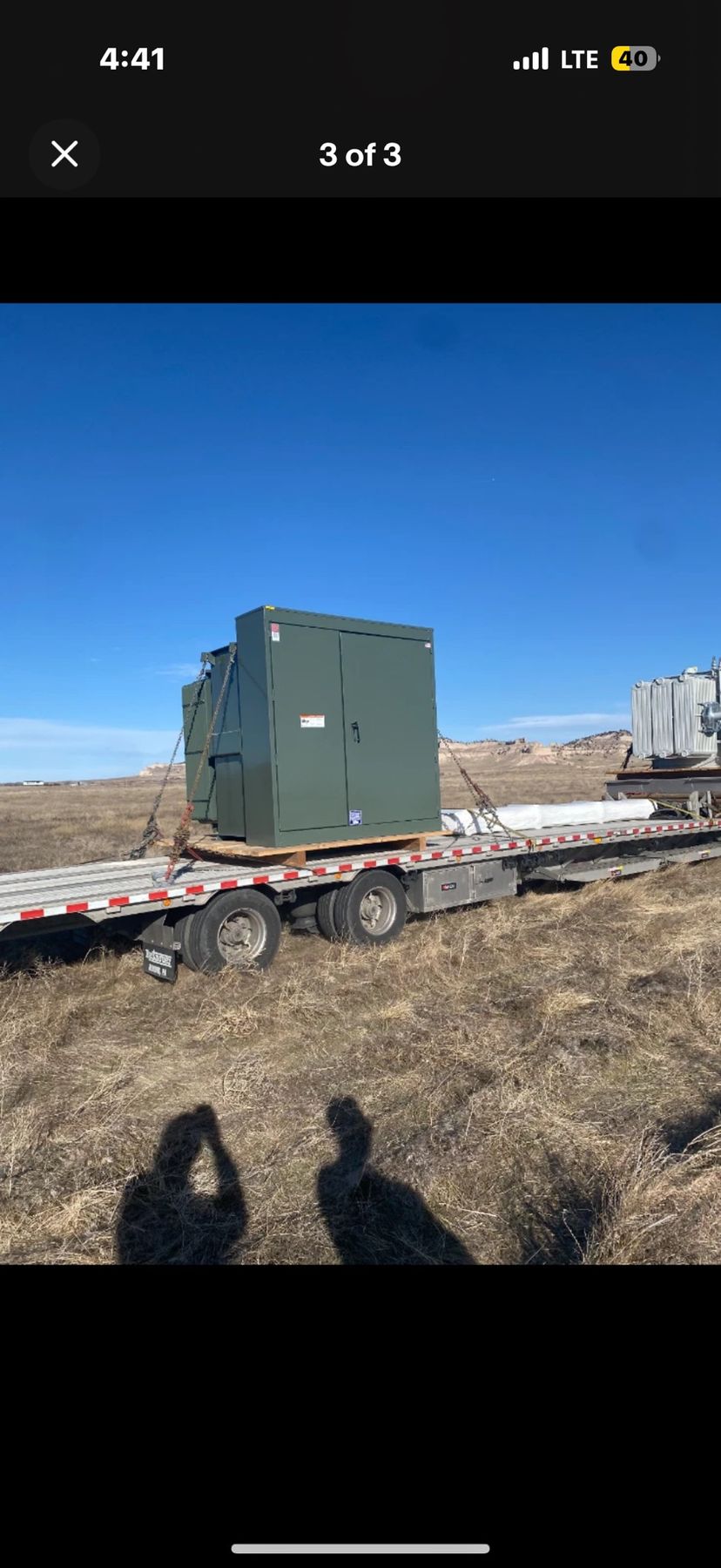
Your Rogers equipment
When offering a cast-resin transformer from Rogers, identify the manufacturer, serial number, kVA, primary and secondary voltages, phase, and cooling or fan details if these appear on available records or an external nameplate. Safely accessible photographs of the nameplate and overall assembly are useful; there is no need to open an enclosure or approach exposed electrical parts.
Condition and documentation
Describe visible resin condition carefully, noting apparent cracks, impact marks, contamination, damaged supports, or missing fan or enclosure accessories without diagnosing internal damage. Include known service records if available, and state when operating history or the condition behind covers is unknown. Appearance alone does not establish performance or value.
Prepare for a safe transfer
Share the Rogers site location, approximate weight and dimensions if known, and any practical limits on moving the unit through its room, doorway, or loading area. Actual building access and staging space affect coordination, so report observed constraints rather than assuming a route. Isolation and absence-of-voltage verification belong to qualified electrical personnel before movement.
Local access in Rogers
Rogers warehouses and commercial properties may have distribution equipment supporting storage and delivery operations. A unit removed during expansion can be documented with its nameplate and any known damage.
Schedule the truck approach to avoid peak trailer traffic and verify a clear staging bay.
About cast-resin transformers
Cast-resin transformers are a dry-type design with windings encapsulated in resin and are used in applications where a liquid-filled unit may not be preferred. A buyer looks at voltage, kVA, cooling provisions, enclosure or fan accessories, and the visible condition of the encapsulated windings. Cracks, impact damage, contamination, and incomplete accessories can affect further evaluation.
Supply nameplate and coil photographs, noting visible resin cracks, damaged supports, fan equipment, and available service records.
Following isolation and verification by qualified personnel, lift at designated structural points and prevent slings or forks from bearing on the resin coils.