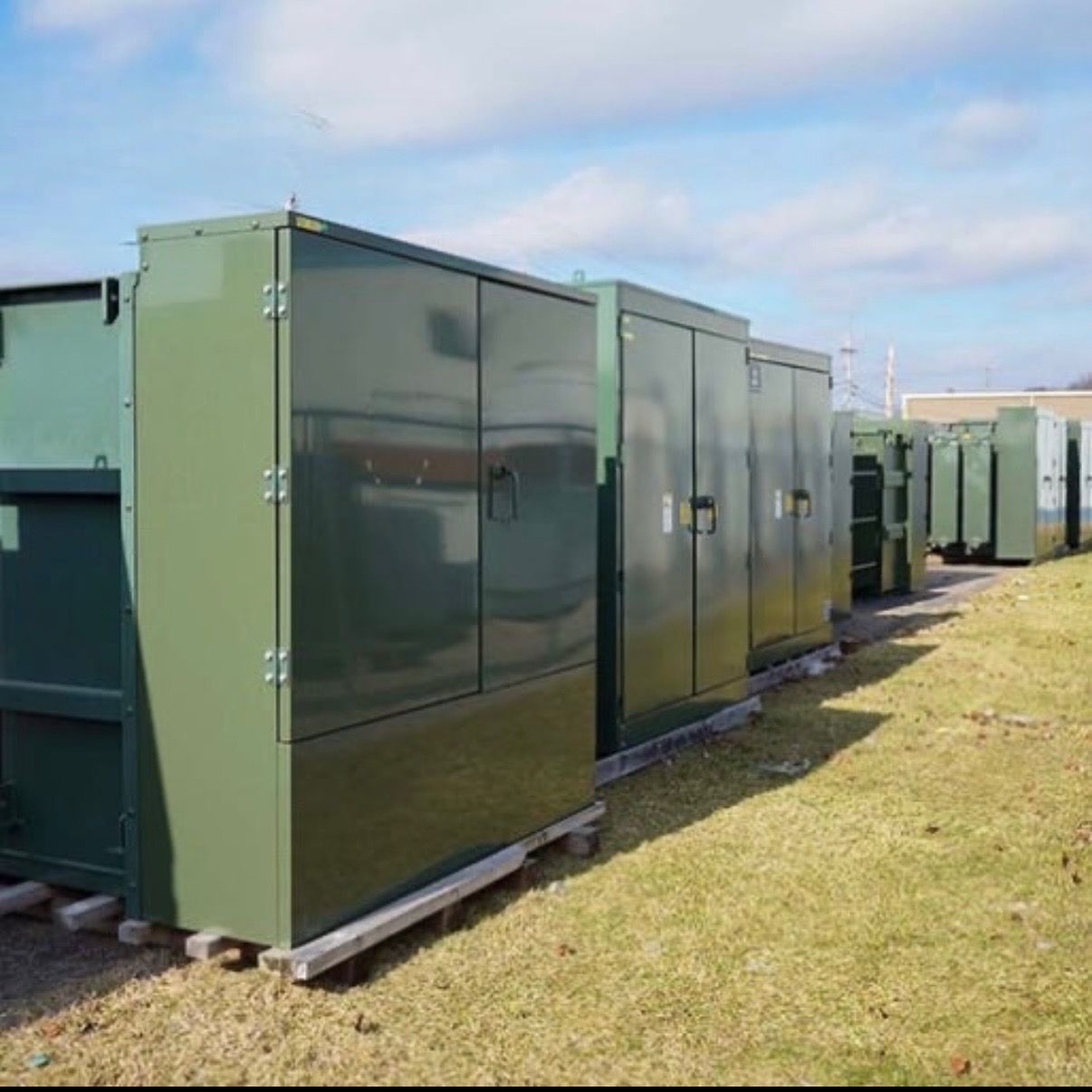
Your Richfield equipment
When describing a cast-resin transformer available in Richfield, share the nameplate fields already visible, including manufacturer, serial number, kVA, primary and secondary voltages, phase, and cooling details. External photos of the nameplate, enclosure, and resin coils can help explain the unit and included fan equipment or supports without asking anyone to open an energized enclosure.
Condition and documentation
Report visible cracks, impact marks, contamination, damaged supports, missing panels, or fan issues only if observed, and separate those observations from unknown service history. Do not infer value, condition, or suitability from the cast-resin design. Any available maintenance records may add context; otherwise, say they are unavailable rather than suggesting undocumented facts.
Prepare for a safe transfer
For a Richfield pickup evaluation, note the actual location, approximate weight and dimensions if known, and constraints such as narrow access, stairs, or limited loading space. Explain whether the unit is indoors and what route is known, without presuming a suitable lift path. Isolation and verification of de-energization belong to qualified electrical personnel; moving plans should protect the resin coils.
Local access in Richfield
Richfield retail buildings and offices may use distribution transformers for lighting, cooling, and tenant loads. Equipment available after a remodel can be documented without assuming it is in working condition.
Check whether the service entrance is accessible to a truck without blocking neighboring businesses.
About cast-resin transformers
Cast-resin transformers are a dry-type design with windings encapsulated in resin and are used in applications where a liquid-filled unit may not be preferred. A buyer looks at voltage, kVA, cooling provisions, enclosure or fan accessories, and the visible condition of the encapsulated windings. Cracks, impact damage, contamination, and incomplete accessories can affect further evaluation.
Supply nameplate and coil photographs, noting visible resin cracks, damaged supports, fan equipment, and available service records.
Following isolation and verification by qualified personnel, lift at designated structural points and prevent slings or forks from bearing on the resin coils.