Your Plymouth equipment
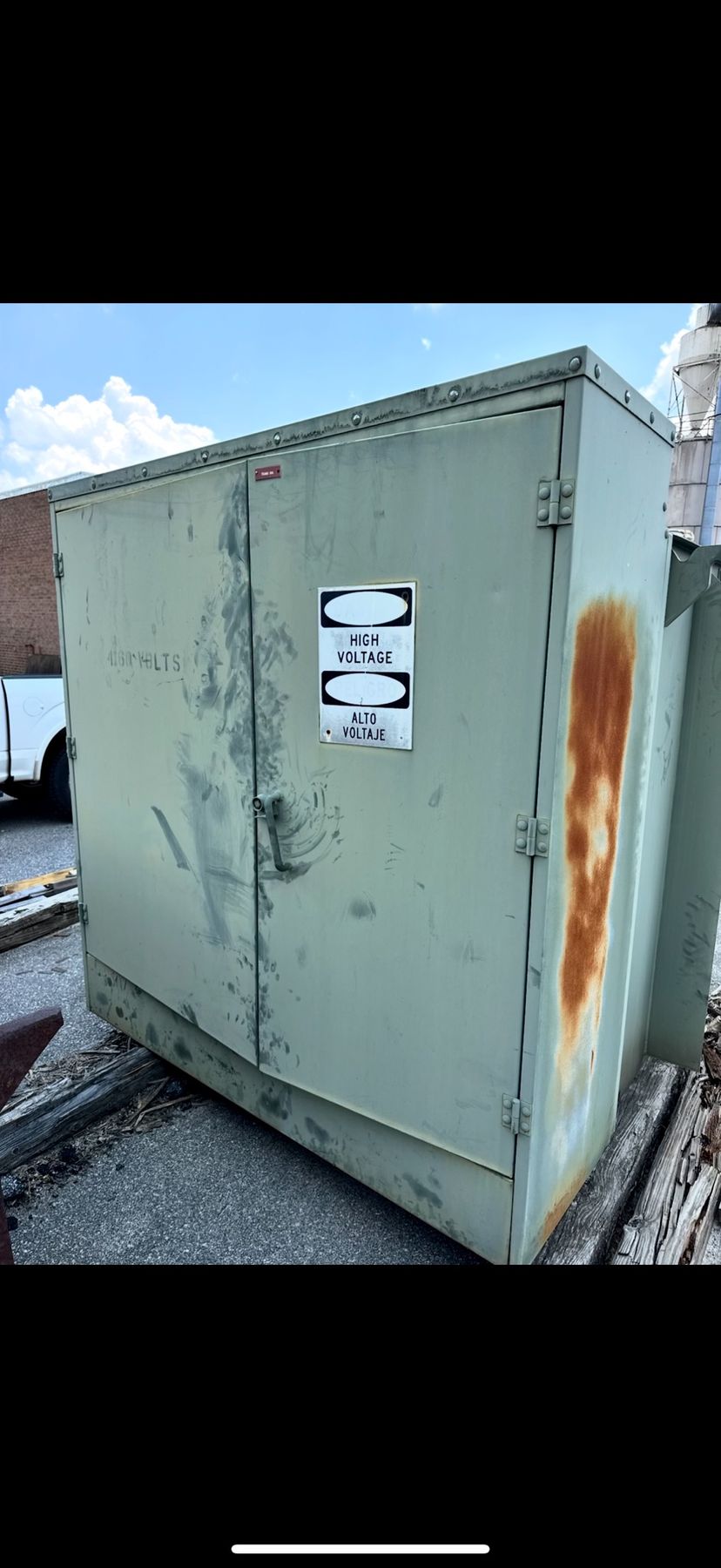
For a cast-resin transformer offered by an owner in Plymouth, useful visible data include manufacturer, kVA, primary and secondary voltages, phase, serial number, and cooling or fan details when present. Share external nameplate and coil photographs only from a safely accessible position. If the construction or a rating is uncertain, describe what the label says rather than relying on appearance alone.
Condition and documentation
A clear condition description can note visible resin cracks, impact marks, contamination, damaged supports, missing covers, or absent fan equipment. Include service records only if available, and do not infer operating condition from the visible resin. Unknown history should be identified as unknown; do not open energized equipment or attempt electrical checks to obtain more detail.
Prepare for a safe transfer
To help assess coordination at the actual Plymouth location, provide the transformer’s position, approximate weight and dimensions if known, and any access or loading limitations. Room openings and route constraints may matter for a heavy unit, but site conditions should be described rather than assumed. Qualified personnel must isolate and verify de-energization; handling should use designated structural points and avoid loading the resin coils.
Local access in Plymouth
Plymouth office and industrial buildings may use transformers to supply lighting, machinery, and building systems. The equipment's voltage and enclosure type help a buyer understand what is being offered.
Measure the service-room opening and any protected corridor turns before choosing a route to the loading dock.
About cast-resin transformers
Cast-resin transformers are a dry-type design with windings encapsulated in resin and are used in applications where a liquid-filled unit may not be preferred. A buyer looks at voltage, kVA, cooling provisions, enclosure or fan accessories, and the visible condition of the encapsulated windings. Cracks, impact damage, contamination, and incomplete accessories can affect further evaluation.
Supply nameplate and coil photographs, noting visible resin cracks, damaged supports, fan equipment, and available service records.
Following isolation and verification by qualified personnel, lift at designated structural points and prevent slings or forks from bearing on the resin coils.