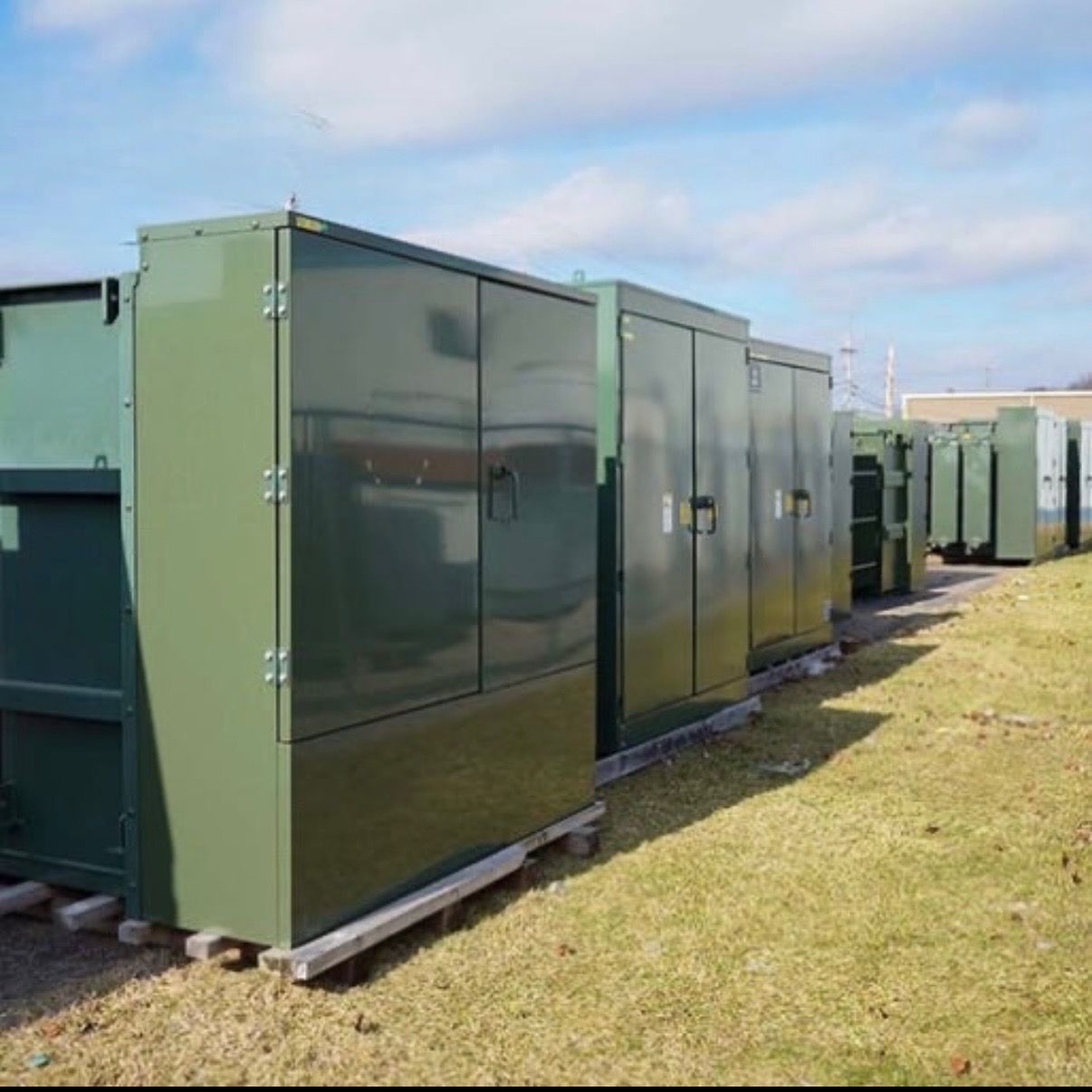
Your Oakdale equipment
For an Oakdale owner offering a substation or power transformer, start with what can be read without approaching hazardous equipment: manufacturer, kVA or MVA, primary and secondary voltages, phase, serial number, and cooling designation. If available, share external nameplate and overall photos, plus known service history and records about fluid or PCB status; mark undocumented details as unknown.
Condition and documentation
Describe the unit’s visible condition rather than guessing at its internal state. Note any apparent tank leaks, corrosion, damaged bushings or radiators, missing accessories, or known operating issues, and identify anything you cannot confirm. The buyer’s review may also depend on tap-changer details, accessory completeness, approximate weight, dimensions, and whether those figures are documented.
Prepare for a safe transfer
Give the actual Oakdale site location and practical access information, including the unit’s position, clearances, surface or route constraints, and available loading equipment if known. For a shared parking aisle, coordination with neighboring tenants may matter. Do not move or inspect energized equipment; isolation, voltage verification, disconnection, and any testing belong to qualified electrical personnel using safe procedures.
Local access in Oakdale
Oakdale office and retail properties may have transformers for shared electrical distribution. A change in building layout can leave a unit that needs its ratings and ownership confirmed.
Coordinate the work zone with neighboring tenants when equipment is beside a shared parking aisle.
About substation and power transformers
Substation and power transformers handle voltage conversion for larger electrical systems and may have substantial tanks, radiators, bushings, or tap equipment. A buyer considers the winding voltages, rated capacity, cooling arrangement, service history, and whether major accessories are present. Fluid condition, known failures, and removal constraints can materially affect an evaluation.
Provide clear nameplate and bushing photographs, tap-changer details, overall weight, and available fluid and PCB records without assuming an unknown fluid is clean.
After qualified personnel isolate and verify the unit is de-energized, plan lifting and transport around its actual weight, center of gravity, approved lift points, and any separately secured accessories.