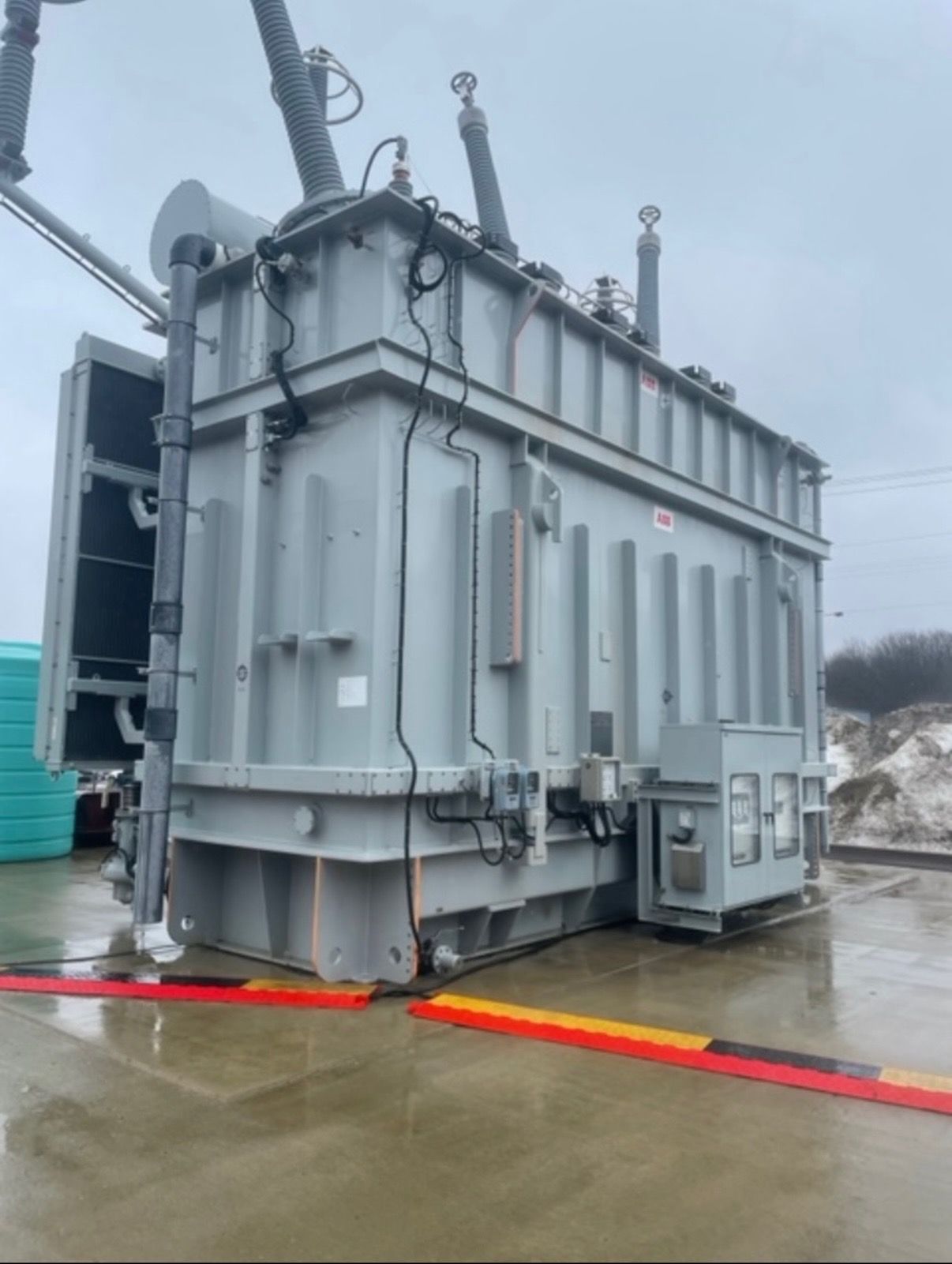
Your Minnetonka equipment
When a cast-resin transformer is surplus at a Minnetonka site, identify it from records or its safely accessible external nameplate: manufacturer, serial number, kVA, primary and secondary voltages, phase, and cooling details. If fans or other accessories are included, mention them when known. Do not remove covers or approach exposed parts to obtain information.
Condition and documentation
Cast-resin construction does not establish a unit’s operating condition. Describe only what is visible, such as cracks or impact marks in resin, damaged supports, dust or contamination, corrosion, or missing fan equipment. Include available service records and clearly identify unknowns. Isolation, verification of de-energization, inspection, and testing are tasks for appropriately qualified electrical personnel using safe procedures.
Prepare for a safe transfer
A useful Minnetonka pickup inquiry includes the equipment’s exact site location, approximate weight and dimensions if recorded, and known access or loading restrictions. Note the route through doors, corridors, or a garage only if that information is already available; clearance and floor capacity may affect coordination. Moving plans must protect the coils and use suitable structural lifting points.
Local access in Minnetonka
Minnetonka office buildings and commercial campuses may contain dry-type equipment in enclosed utility spaces. Changes to building occupancy or service capacity can leave older units unused.
Check parking-garage ceiling clearance and floor loading before using a garage as the removal route.
About cast-resin transformers
Cast-resin transformers are a dry-type design with windings encapsulated in resin and are used in applications where a liquid-filled unit may not be preferred. A buyer looks at voltage, kVA, cooling provisions, enclosure or fan accessories, and the visible condition of the encapsulated windings. Cracks, impact damage, contamination, and incomplete accessories can affect further evaluation.
Supply nameplate and coil photographs, noting visible resin cracks, damaged supports, fan equipment, and available service records.
Following isolation and verification by qualified personnel, lift at designated structural points and prevent slings or forks from bearing on the resin coils.