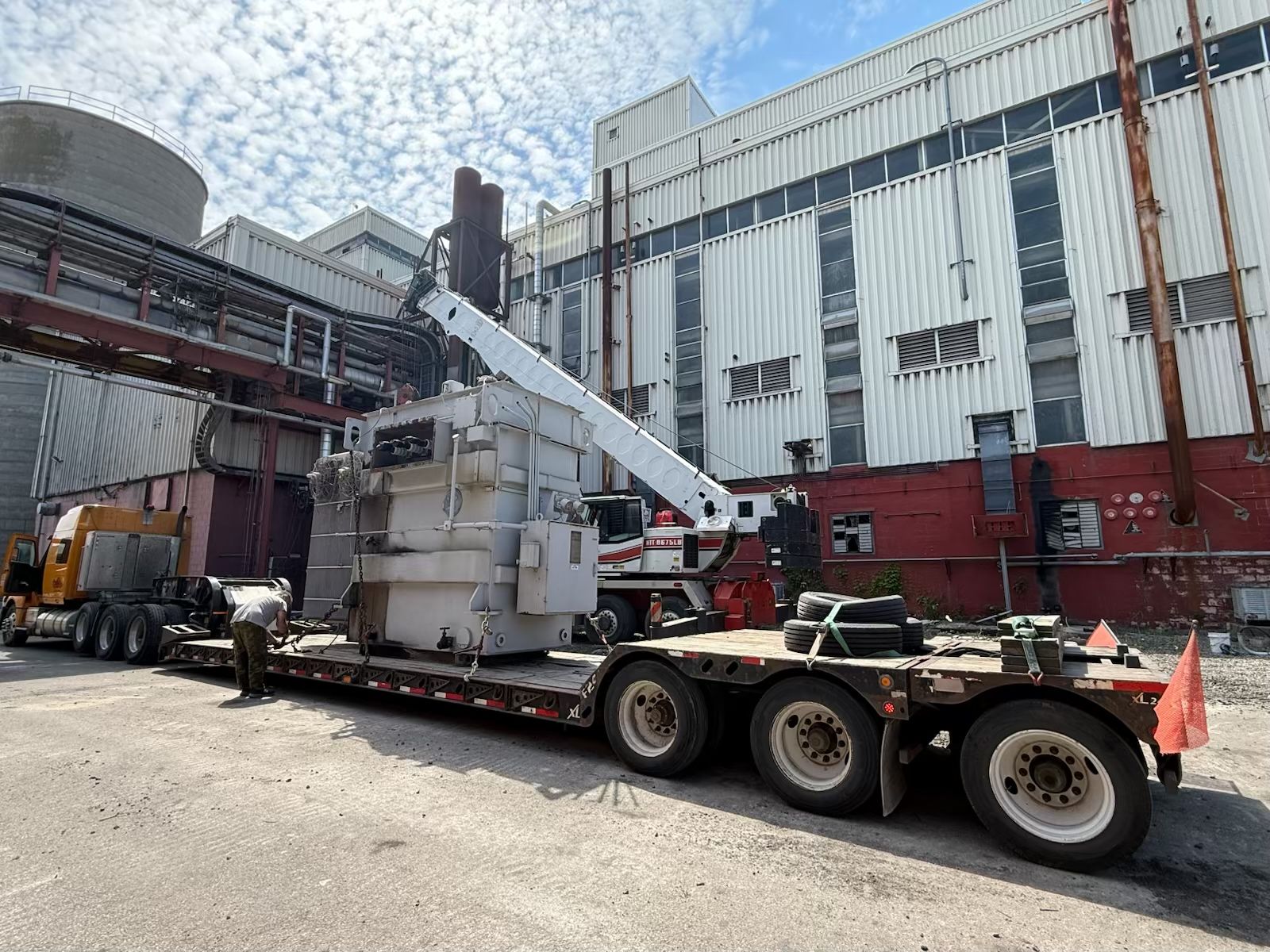
Your Minneapolis equipment
Cast-resin transformers are a distinct dry-type design, so include any visible manufacturer, serial number, kVA, primary and secondary voltages, phase, and cooling details from the nameplate. For a Minneapolis offer, safely accessible external photos of the nameplate, enclosure, and coils can help identify the configuration; do not remove covers to obtain them.
Condition and documentation
Report visible resin cracks, impact marks, contamination, damaged supports, or missing fan equipment, and distinguish observed condition from unknown service history. Do not infer performance or suitability from appearance. Any inspection, testing, isolation, and verification of de-energization should be performed by appropriately qualified electrical personnel using safe procedures.
Prepare for a safe transfer
To support planning, provide the actual Minneapolis site location, approximate dimensions and weight if known, and details about access, lifting clearance, and the route to loading. Note whether accessories are present or separately stored. Movement must account for the unit’s structure and protect the resin coils; do not attempt to lift or disconnect it.
Local access in Minneapolis
Office towers and older commercial buildings in Minneapolis may have transformers in basement electrical rooms. Industrial properties can also have larger distribution equipment left from power-system upgrades.
For a basement unit, check freight-elevator capacity, doorway dimensions, and the path to a legal loading area before arranging removal.
About cast-resin transformers
Cast-resin transformers are a dry-type design with windings encapsulated in resin and are used in applications where a liquid-filled unit may not be preferred. A buyer looks at voltage, kVA, cooling provisions, enclosure or fan accessories, and the visible condition of the encapsulated windings. Cracks, impact damage, contamination, and incomplete accessories can affect further evaluation.
Supply nameplate and coil photographs, noting visible resin cracks, damaged supports, fan equipment, and available service records.
Following isolation and verification by qualified personnel, lift at designated structural points and prevent slings or forks from bearing on the resin coils.