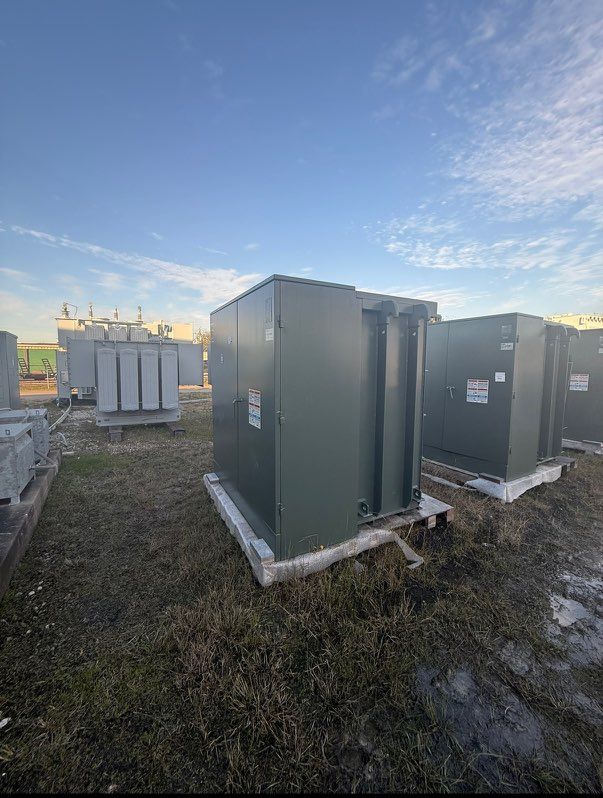
Your Maplewood equipment
If a Maplewood building modernization has left a substation or power transformer surplus, start with what can be read without disturbing it: manufacturer, serial number, kVA, primary and secondary voltages, phase, cooling designation, and tap-changer information. A safely accessible external nameplate photo can help; leave unreadable or unavailable fields marked unknown.
Condition and documentation
Describe the unit’s observed condition plainly, including tank or radiator damage, corrosion, leaks, bushing concerns, and whether accessories appear present. Share service history or fluid and PCB records only if already available; do not infer fluid condition or status from appearance. Any inspection, isolation, or testing belongs to appropriately qualified electrical personnel using safe procedures.
Prepare for a safe transfer
For a Maplewood evaluation, note the transformer’s building or outdoor location, approximate weight and dimensions if known, and the route and loading limits that may affect removal. Mention security-controlled doors or other access controls and whether the route can accommodate the load’s full width. Do not open equipment or approach exposed live parts to gather details.
Local access in Maplewood
Maplewood commercial buildings and institutional properties may contain transformers serving separate building loads. A service modernization can leave equipment with useful nameplate and maintenance information.
Identify any security-controlled doors and arrange building access for the full width of the load.
About substation and power transformers
Substation and power transformers handle voltage conversion for larger electrical systems and may have substantial tanks, radiators, bushings, or tap equipment. A buyer considers the winding voltages, rated capacity, cooling arrangement, service history, and whether major accessories are present. Fluid condition, known failures, and removal constraints can materially affect an evaluation.
Provide clear nameplate and bushing photographs, tap-changer details, overall weight, and available fluid and PCB records without assuming an unknown fluid is clean.
After qualified personnel isolate and verify the unit is de-energized, plan lifting and transport around its actual weight, center of gravity, approved lift points, and any separately secured accessories.