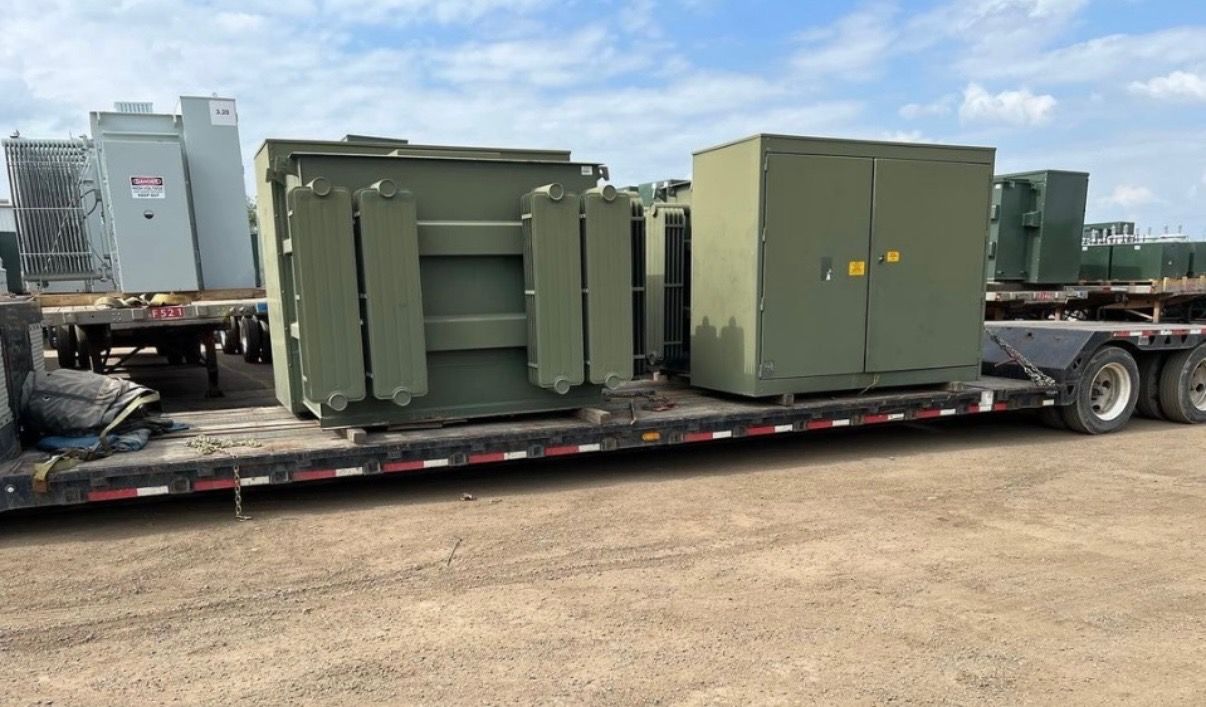
Your Lakeville equipment
When describing a cast-resin transformer available from a Lakeville owner, share visible nameplate fields such as manufacturer, serial number, kVA, primary and secondary voltages, phase, and cooling information. Note whether fan equipment or other accessories are present if known, and include available service records. Do not infer performance, value, or condition from the transformer’s design alone.
Condition and documentation
The encapsulated windings deserve careful description: report only visible cracks, impact damage, contamination, damaged supports, or missing accessories, and identify anything you cannot assess. Safely accessible exterior and coil photographs can help, but do not open an enclosure or approach live components. Isolation, verification of absence of voltage, inspection, and testing are tasks for qualified electrical personnel using safe procedures.
Prepare for a safe transfer
For a Lakeville evaluation, give the actual site location, approximate weight and dimensions if available, and known access or loading limits. Mention whether the enclosure or fans are separate only when you know. Handling should use suitable structural lifting points and protect the resin coils; the owner’s information supports review but does not promise acceptance, pickup, or payment.
Local access in Lakeville
Lakeville industrial and distribution properties may rely on transformers for motors, conveyors, and building loads. Equipment details and access photographs can help define a pickup plan.
For a distribution building, coordinate removal around trailer movements and dock-leveler availability.
About cast-resin transformers
Cast-resin transformers are a dry-type design with windings encapsulated in resin and are used in applications where a liquid-filled unit may not be preferred. A buyer looks at voltage, kVA, cooling provisions, enclosure or fan accessories, and the visible condition of the encapsulated windings. Cracks, impact damage, contamination, and incomplete accessories can affect further evaluation.
Supply nameplate and coil photographs, noting visible resin cracks, damaged supports, fan equipment, and available service records.
Following isolation and verification by qualified personnel, lift at designated structural points and prevent slings or forks from bearing on the resin coils.