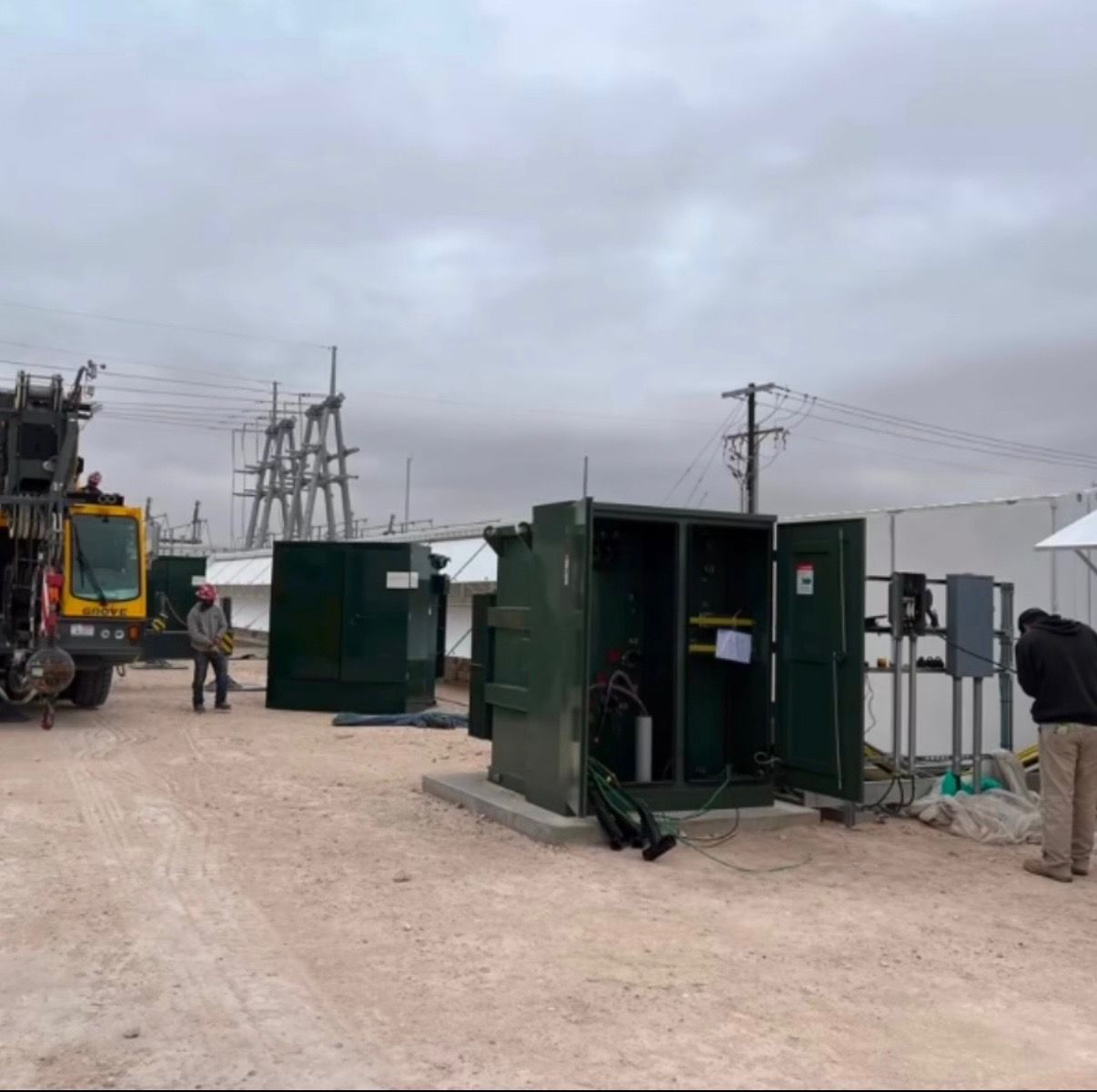
Your Hibbing equipment
A dry-type transformer offered from a Hibbing facility can be described with the nameplate fields that are already visible: manufacturer, serial number, kVA, primary and secondary voltages, phase, and temperature rise if listed. Exterior photos of the enclosure and ventilation openings help show configuration; do not remove covers or approach exposed live parts to obtain information.
Condition and documentation
Tell the buyer what is actually known about operation and condition, including visible discoloration, moisture exposure, corrosion, damaged panels, blocked ventilation, or missing covers. Note whether enclosure details or service history are unknown rather than filling gaps by assumption. Isolation, verification of de-energization, inspection, disconnection, and testing are tasks for qualified electrical personnel using safe procedures.
Prepare for a safe transfer
Share the transformer’s location within the Hibbing property, with approximate weight and dimensions if documented, and known access or loading constraints. Electrical-room routes, door clearances, stairs, and available handling space may matter if applicable, but report only what is known. The actual site layout will shape any coordination discussion and does not guarantee acceptance or removal.
Local access in Hibbing
Hibbing industrial and service properties may have transformers associated with heavy machinery or site distribution. Outdoor storage and older service histories make condition and fluid documentation relevant to an evaluation.
Check for ice, uneven ground, and sufficient rigging space around a unit stored in an industrial yard.
About dry-type transformers
Dry-type transformers use air or solid insulation rather than a liquid-filled tank and are often installed in electrical rooms. Buyers review kVA, voltage, phase, temperature rise, enclosure configuration, ventilation, and signs of overheating or moisture exposure. Missing covers and modifications can also change the assessment.
Photograph the nameplate, ventilation openings, enclosure, and any visible discoloration or mechanical damage without opening energized equipment.
After qualified personnel isolate and verify de-energization, move the unit with rated equipment using suitable lift points and protect exposed coils and ventilation panels.