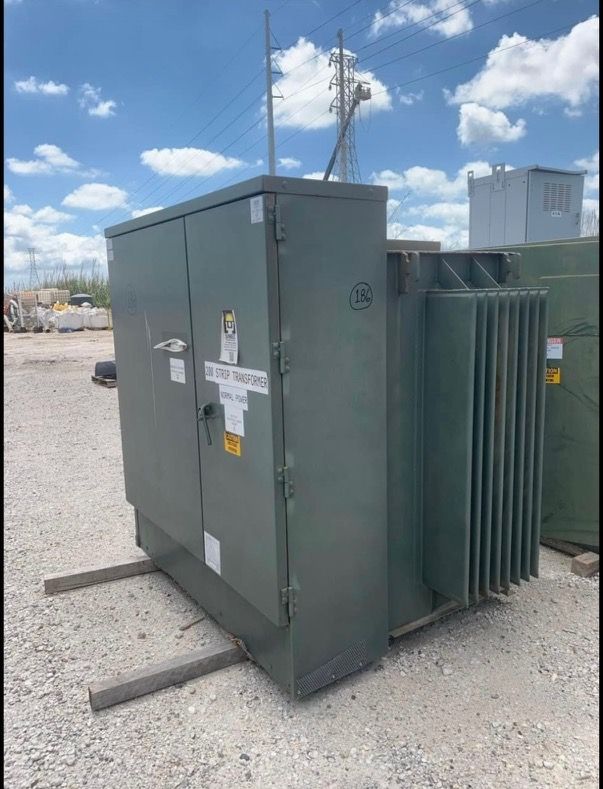
Your Faribault equipment
A Faribault owner considering a surplus pad-mounted transformer can help an initial review by identifying the manufacturer, kVA, primary and secondary voltages, phase, and serial number from existing records or an exterior nameplate. If known, clarify whether the equipment belongs to your organization; do not assume utility-owned equipment is yours to offer.
Condition and documentation
Describe the cabinet, base, and accessible exterior condition, including corrosion, dents, damaged doors, or visible concerns near cable compartments. Share fluid or PCB documentation only if it is already available, and mark unknown details as unknown. Do not open an enclosure or approach exposed electrical parts to gather information; exterior photos are useful only from a safe position.
Prepare for a safe transfer
Include the transformer’s location in Faribault, approximate weight and dimensions if known, and practical access details such as the route from the pad, clearance limits, and loading constraints. These details help assess coordination needs without assuming site access or lifting equipment. Qualified electrical personnel must handle isolation, verification of absence of voltage, disconnection, and any inspection or testing.
Local access in Faribault
Faribault industrial and agricultural businesses may use distribution transformers for production and storage. Retired units can vary in age, fluid type, and documentation.
Check the load path through any active production area and allow space for securing the unit on the truck.
About pad-mounted transformers
Pad-mounted transformers sit in ground-level enclosures and commonly serve commercial or distribution loads. Buyers assess primary and secondary ratings, phase, enclosure condition, fluid information, and whether the unit is owned by the seller rather than a utility. Corrosion at the cabinet base or damage around cable compartments can affect value and removal planning.
Share the nameplate, cabinet and base photographs, ownership information, and any available fluid or PCB documentation.
Once qualified personnel isolate and verify de-energization, use suitable lifting provisions and protect the tank and cable compartments while moving the unit from its pad.