Your Eden Prairie equipment
When offering a surplus dry-type transformer from an Eden Prairie building, share the nameplate fields already available: manufacturer, serial number, kVA, primary and secondary voltages, phase, and temperature rise if shown. An exterior nameplate photo is useful only when it can be taken from a safely accessible position; do not remove covers or approach energized equipment.
Condition and documentation
Describe the enclosure configuration and visible condition of ventilation openings, covers, and accessible surfaces. Mention discoloration, signs of overheating, moisture exposure, modifications, or mechanical damage, and say when the cause or history is unknown. A buyer may also use available service records; do not infer internal condition from exterior appearance, and leave inspection and testing to qualified personnel.
Prepare for a safe transfer
For site planning in Eden Prairie, provide the unit’s room or area, approximate weight and dimensions if documented, and any known doorway, route, elevator, or loading restrictions. Building access, management approval, or a shared loading dock may affect coordination at your actual location. Isolation, verification of absence of voltage, and any disconnection must be performed by appropriately qualified electrical personnel.
Local access in Eden Prairie
Eden Prairie offices and industrial buildings may use transformers for both building systems and process equipment. Units removed during a tenant change can be evaluated alongside available maintenance records.
Confirm building-management approval and loading-dock access before moving a transformer through a shared complex.
About dry-type transformers
Dry-type transformers use air or solid insulation rather than a liquid-filled tank and are often installed in electrical rooms. Buyers review kVA, voltage, phase, temperature rise, enclosure configuration, ventilation, and signs of overheating or moisture exposure. Missing covers and modifications can also change the assessment.
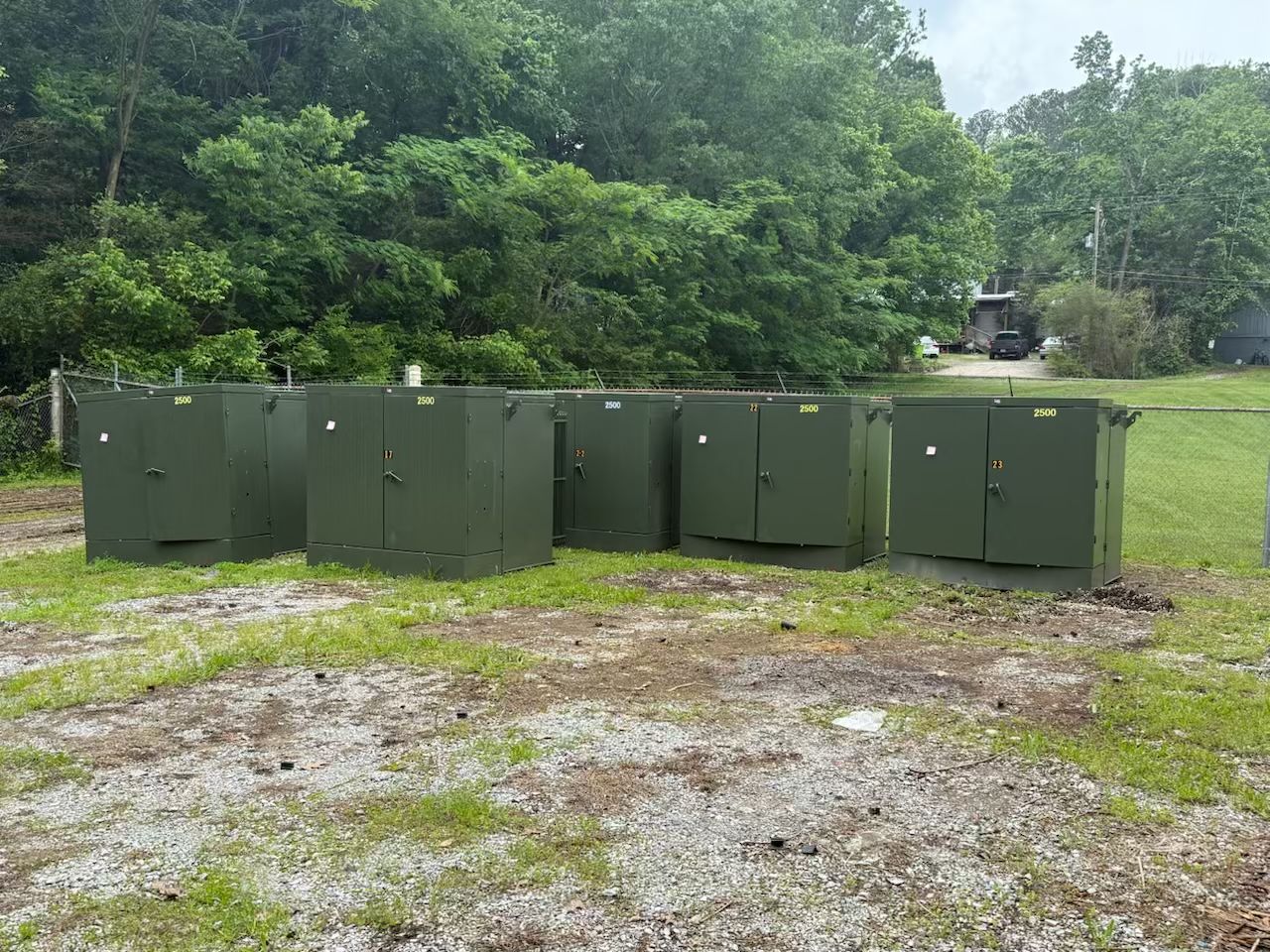
Photograph the nameplate, ventilation openings, enclosure, and any visible discoloration or mechanical damage without opening energized equipment.
After qualified personnel isolate and verify de-energization, move the unit with rated equipment using suitable lift points and protect exposed coils and ventilation panels.