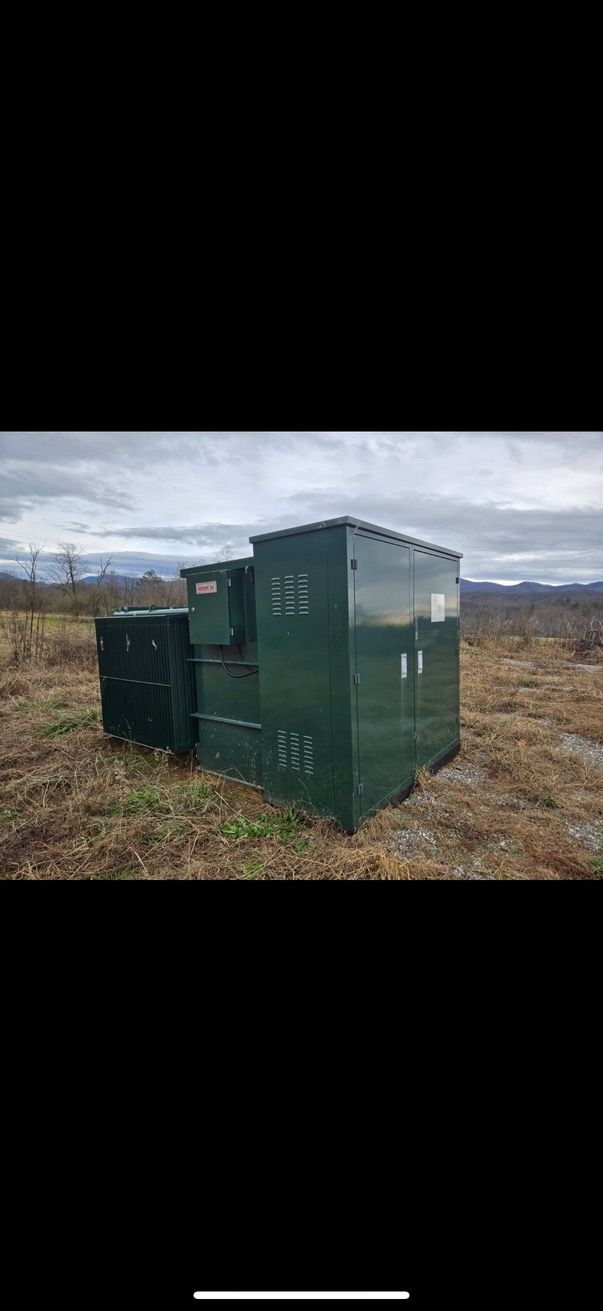
Your Cottage Grove equipment
Owners in Cottage Grove considering a surplus pad-mounted transformer can begin by identifying the manufacturer, serial number, kVA, primary and secondary voltages, and phase from records or an external nameplate photo taken from a safely accessible position. If known, include enclosure configuration and fluid documentation. Clarify whether the unit belongs to you or your organization rather than assuming ownership from its location.
Condition and documentation
A useful condition description covers the cabinet, base, doors, and cable-compartment areas, including visible corrosion, impact damage, or leaks. State plainly when fluid history, PCB records, or operating condition is unknown. Do not open compartments or approach exposed live parts to gather details; electrical isolation, verification, disconnection, inspection, and testing are tasks for qualified personnel using safe procedures.
Prepare for a safe transfer
When describing a Cottage Grove location, include where the transformer sits, approximate dimensions and weight if available, and any known access or loading constraints. Note whether the route or staging area may be restricted, but do not assume a truck can reach the pad. Site-specific visitor procedures and a designated staging area should be confirmed before a vehicle enters an industrial yard.
Local access in Cottage Grove
Cottage Grove industrial properties may use transformers for process and site distribution systems. Surplus equipment should be described with its operating history and any known fluid information.
Confirm site-specific visitor requirements and the designated staging area before a truck enters an industrial yard.
About pad-mounted transformers
Pad-mounted transformers sit in ground-level enclosures and commonly serve commercial or distribution loads. Buyers assess primary and secondary ratings, phase, enclosure condition, fluid information, and whether the unit is owned by the seller rather than a utility. Corrosion at the cabinet base or damage around cable compartments can affect value and removal planning.
Share the nameplate, cabinet and base photographs, ownership information, and any available fluid or PCB documentation.
Once qualified personnel isolate and verify de-energization, use suitable lifting provisions and protect the tank and cable compartments while moving the unit from its pad.