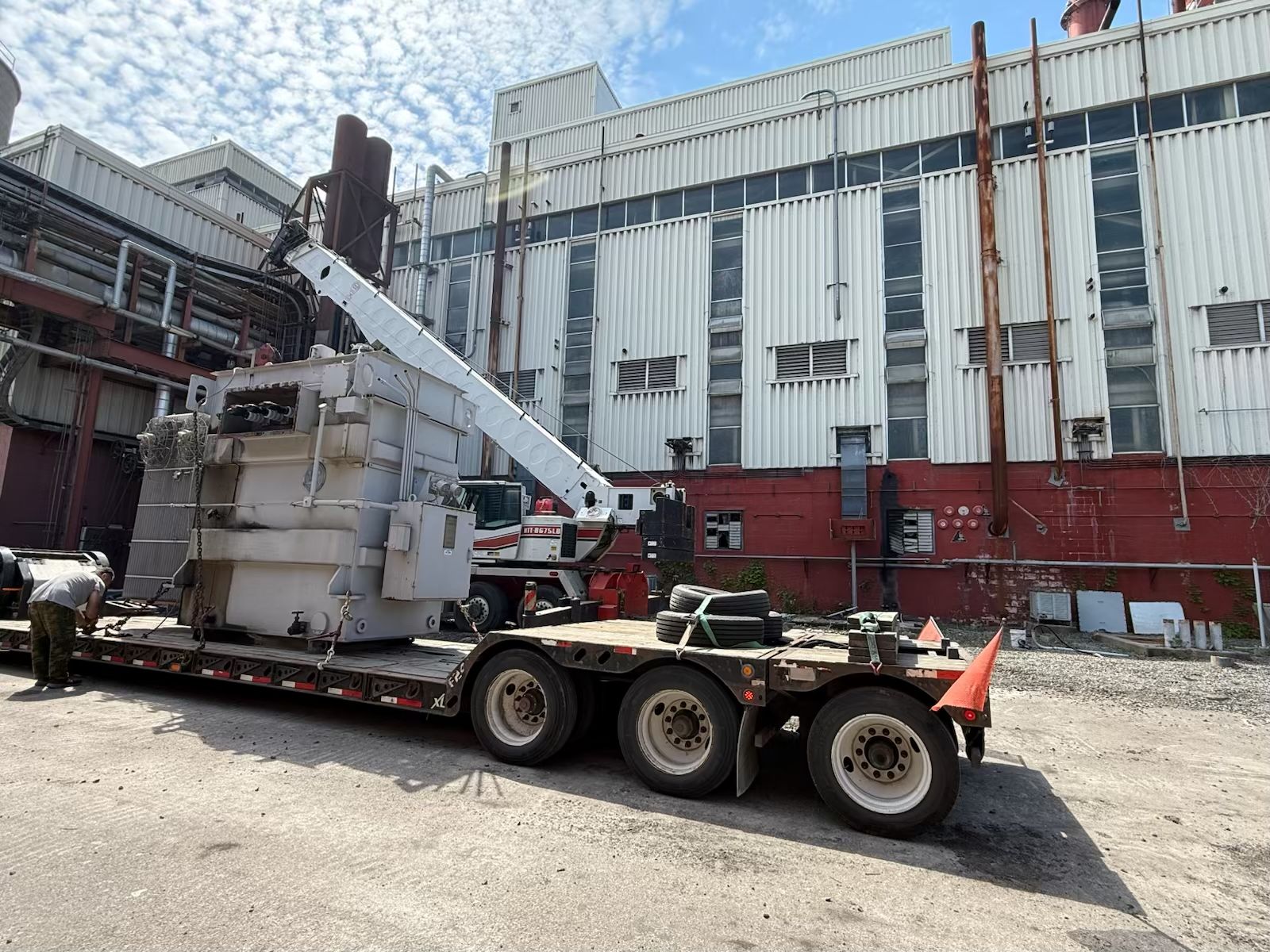
Your Chaska equipment
Dry-type transformers from Chaska offices or business properties may be considered for review when surplus, whether they are in a room or another storage location. Share the manufacturer, kVA, primary and secondary voltages, phase, serial number, temperature-rise rating, and enclosure configuration when visible; mark any unavailable nameplate details as unknown.
Condition and documentation
Without opening equipment, describe visible enclosure damage, missing covers, blocked or damaged ventilation panels, discoloration, or signs of moisture exposure. Mention known modifications or service history if documented. A dry-type design does not establish the unit’s condition, so avoid assumptions about overheating, prior use, or suitability.
Prepare for a safe transfer
Provide its location, approximate dimensions and weight if known, and any doorway, stair, clearance, or loading limitations that could affect movement from the property. A clear exterior photo or safely accessible nameplate image can help communicate what is present. Isolation, absence-of-voltage verification, disconnection, inspection, and testing are for qualified electrical personnel.
Local access in Chaska
Chaska business properties may include manufacturing spaces, offices, and equipment yards. Electrical renovations in these settings can leave transformers with different voltage and cooling arrangements.
Ask whether a low-clearance canopy or covered loading area affects access for a lifting vehicle.
About dry-type transformers
Dry-type transformers use air or solid insulation rather than a liquid-filled tank and are often installed in electrical rooms. Buyers review kVA, voltage, phase, temperature rise, enclosure configuration, ventilation, and signs of overheating or moisture exposure. Missing covers and modifications can also change the assessment.
Photograph the nameplate, ventilation openings, enclosure, and any visible discoloration or mechanical damage without opening energized equipment.
After qualified personnel isolate and verify de-energization, move the unit with rated equipment using suitable lift points and protect exposed coils and ventilation panels.