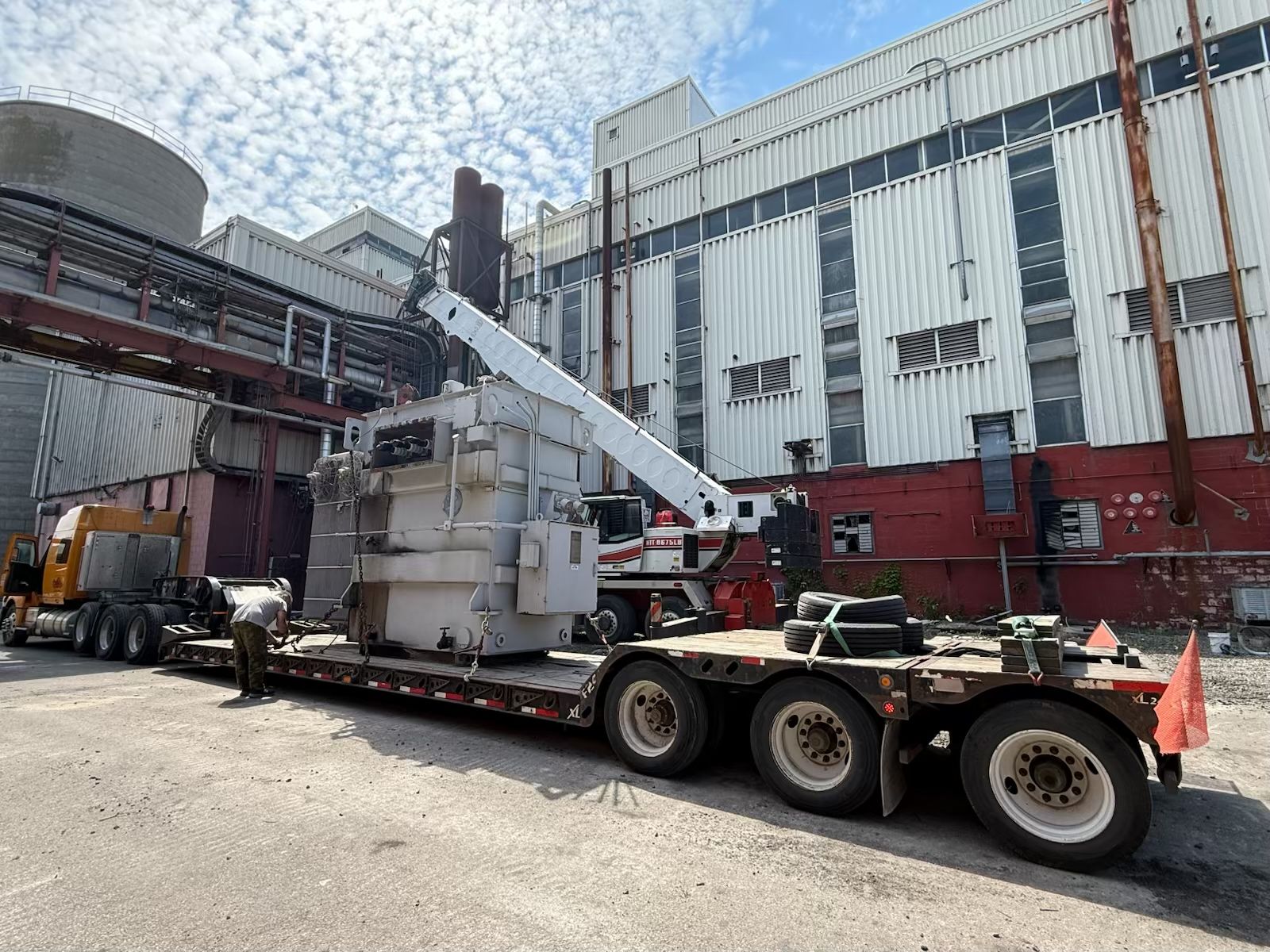
Your Brooklyn Park equipment
When a Brooklyn Park site has a surplus pole-mounted distribution transformer, start with what can be read without approaching hazardous equipment. Share manufacturer, kVA, primary and secondary voltage, phase, serial number, and any visible connection or mounting information. If the nameplate is unreadable or a field is missing, say so rather than estimating the rating.
Condition and documentation
A concise description can distinguish single-phase from three-phase equipment if known and report visible tank dents, corrosion, leaks, bushing damage, or missing brackets. Mention available service or insulating-fluid records, but do not infer fluid or contamination status from the unit’s type or exterior. Only provide existing records or exterior photos taken from a safely accessible position.
Prepare for a safe transfer
State where the transformer is located in Brooklyn Park and provide approximate weight and dimensions if known, plus known constraints on access or handling. If it remains elevated, say so; do not attempt to lower or disconnect it. Qualified personnel must isolate and verify de-energization, and trained riggers must plan any lowering while maintaining safe clearance from overhead lines.
Local access in Brooklyn Park
Brooklyn Park business parks can include manufacturing, storage, and office spaces with their own electrical distribution equipment. A change in tenant or production layout may make a transformer surplus.
Check whether the unit is behind a fenced yard and whether truck and forklift access are available through the gate.
About pole-mounted distribution transformers
Pole-mounted distribution transformers are typically compact units used to change distribution voltage for local loads. A buyer may distinguish single-phase from three-phase equipment and review voltage, kVA, mounting hardware, tank condition, and fluid history. Confirming ownership and whether bushings or brackets are damaged helps establish what is being offered.
Provide a readable nameplate, photographs of the tank and bushings, and any available records identifying the insulating fluid or PCB status.
Have qualified personnel isolate and verify de-energization before trained riggers lower the unit with suitable equipment while keeping clear of overhead lines.