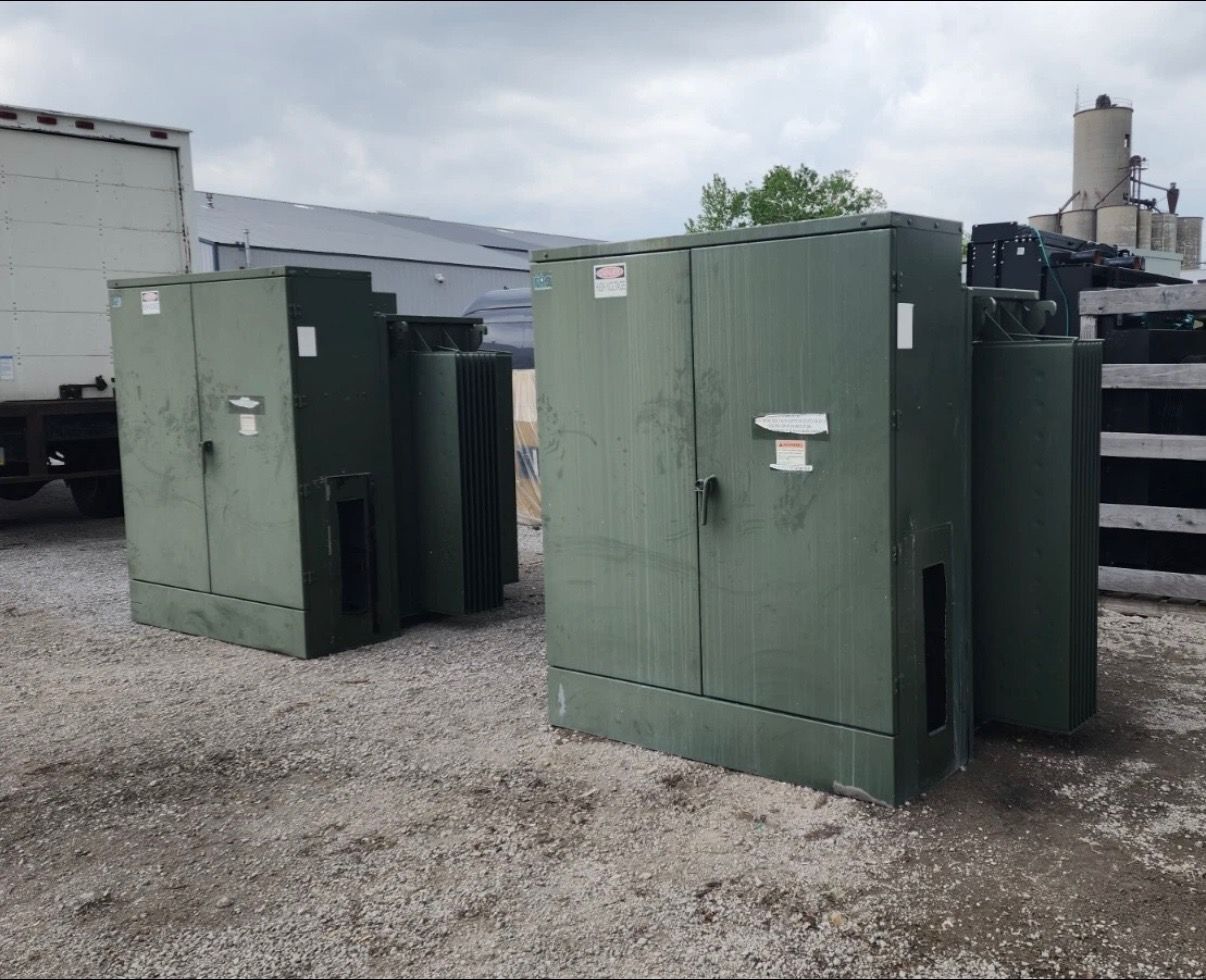
Your Alexandria equipment
A seller in Alexandria considering a pad-mounted transformer can help start an evaluation by sharing visible nameplate details: manufacturer, serial number, kVA, primary and secondary voltages, and phase. State whether the unit is known to belong to the property owner, and flag any uncertainty. Photos should be limited to the exterior and taken only from a safely accessible position.
Condition and documentation
Note the cabinet’s visible condition, especially corrosion near the base, dents, damaged doors, or apparent damage around cable compartments. Mention any known leaks and provide fluid or PCB documentation only if already available; neither fluid type nor condition should be inferred from the enclosure’s appearance. Do not open the cabinet or approach exposed electrical parts to gather information.
Prepare for a safe transfer
Describe where the unit sits on the Alexandria property, how a vehicle might reach the area, and any gates, overhead clearance limits, narrow routes, or loading restrictions you already know. Approximate weight and dimensions are useful when available, not required guesses. Isolation, verification, disconnection, and removal should be handled by qualified personnel following safe procedures.
Local access in Alexandria
Alexandria industrial and commercial properties may have transformers for machinery, cooling, or general distribution. A property upgrade can leave a range of indoor and outdoor units to review.
Confirm winter snow clearance and access to the unit's base before planning an outdoor lift.
About pad-mounted transformers
Pad-mounted transformers sit in ground-level enclosures and commonly serve commercial or distribution loads. Buyers assess primary and secondary ratings, phase, enclosure condition, fluid information, and whether the unit is owned by the seller rather than a utility. Corrosion at the cabinet base or damage around cable compartments can affect value and removal planning.
Share the nameplate, cabinet and base photographs, ownership information, and any available fluid or PCB documentation.
Once qualified personnel isolate and verify de-energization, use suitable lifting provisions and protect the tank and cable compartments while moving the unit from its pad.